PerfectCityBreak
Day-by-day planNetherlands

Rotterdam in 3 days

3-day itineraryRTM · NETHERLANDS

Three days lets Rotterdam breathe, and the extra day is the one that shows you what the bombing spared. Day one takes the rebuilt centre, the Markthal, the Cube Houses and the Museumpark with the Depot and the Kunsthal. Day two is the water: a Spido cruise through the port, the walk over the Erasmusbrug, the Wilhelminapier towers and the Fenix migration museum in Katendrecht. Day three splits between old Delfshaven, the harbour where the Pilgrims sailed in 1620 and the only pre-war street scene in the city, and either the Euromast for the whole port from 185 metres or the lake and snuff mills at Kralingen. A fourth option for day three, if the weather is clear, is the Waterbus out to the nineteen UNESCO windmills at Kinderdijk, about 30 minutes from the Erasmusbrug jetty. Base yourself in the centre near Blaak, or on the Kop van Zuid if you want the skyline from your window. Mondays close most museums, so plan the outdoor day then.

Duration

3 days

Base

Centrum and the Lijnbaan

Mid budget

420 EUR

Best months

May · Jun · Jul

Sleep well for these 3 days

Picks sorted with our recommended base, Centrum and the Lijnbaan, first. Book early: the good-value rooms go weeks ahead.

See all Rotterdam hotels
citizenM Rotterdam, RotterdamCentral and walkable€€

Compact tech-forward rooms · Centrum and the Lijnbaan

citizenM Rotterdam

Rooms are small and wall-to-wall bed, with lighting, blinds and television run from a tablet, and the canteen downstairs serves food and drink around the clock. It stands on Gelderseplein between the Markthal and the Cube Houses, one minute from Blaak metro and rail station.

from ~115 EUR/night

Check prices
nhow Rotterdam, RotterdamDesign lovers€€€

Design hotel inside a skyscraper · Kop van Zuid

nhow Rotterdam

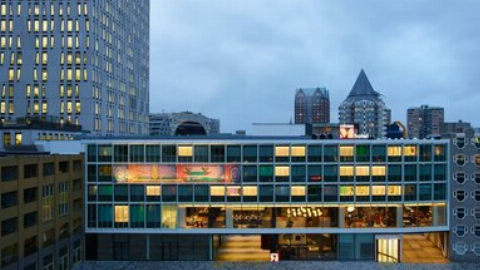
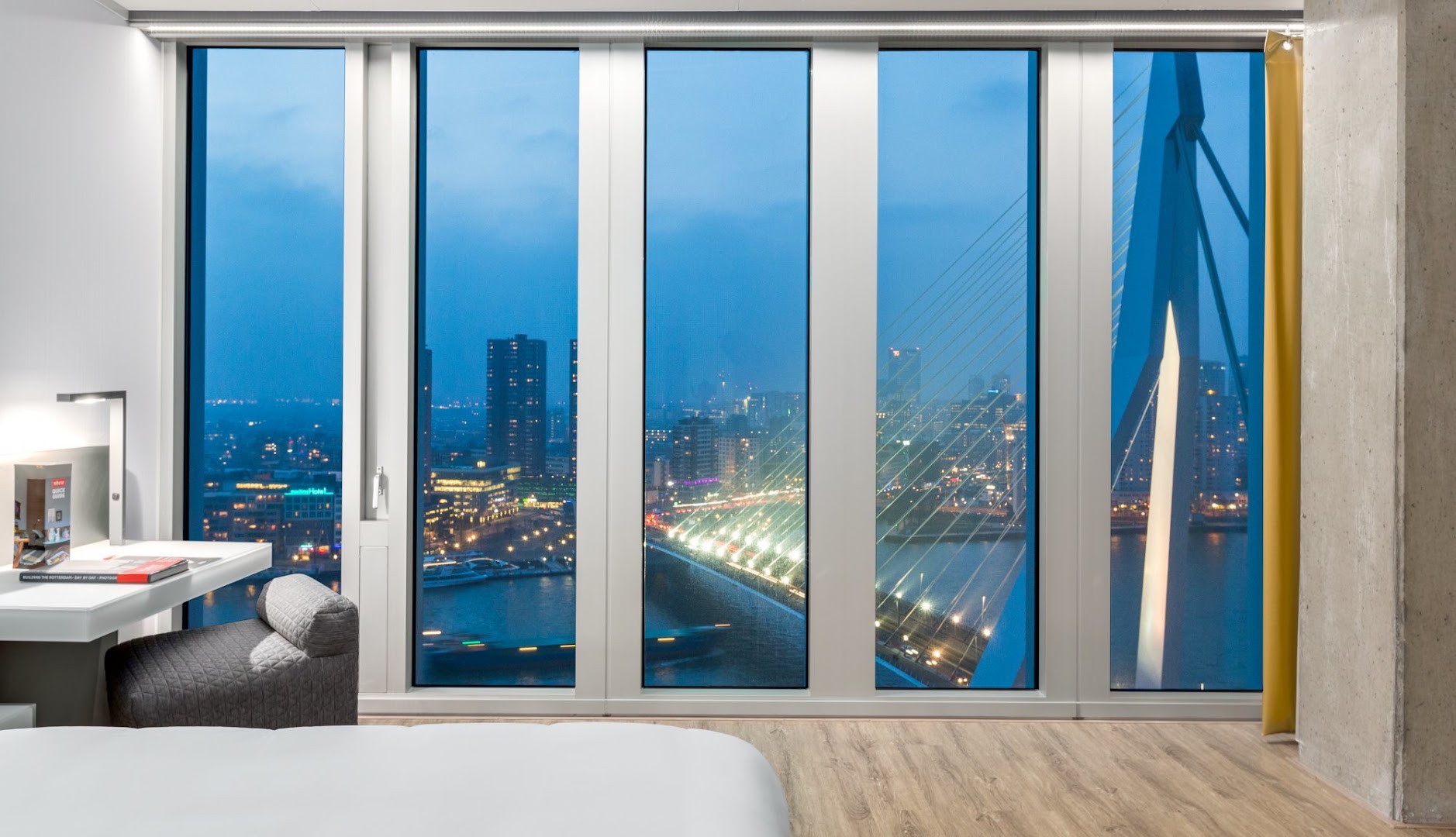
The hotel occupies the lower third of De Rotterdam, the stacked-block tower Rem Koolhaas and OMA finished on the Wilhelminapier in 2013, so every room looks either down the river or straight at the Erasmus Bridge. Reception is on the seventh floor and the water taxi jetty is a two-minute walk, which puts the old centre four minutes away across the Maas.

from ~210 EUR/night

Check prices
Hotel New York, RotterdamLandmark stay€€

Former shipping line headquarters · Kop van Zuid

Hotel New York

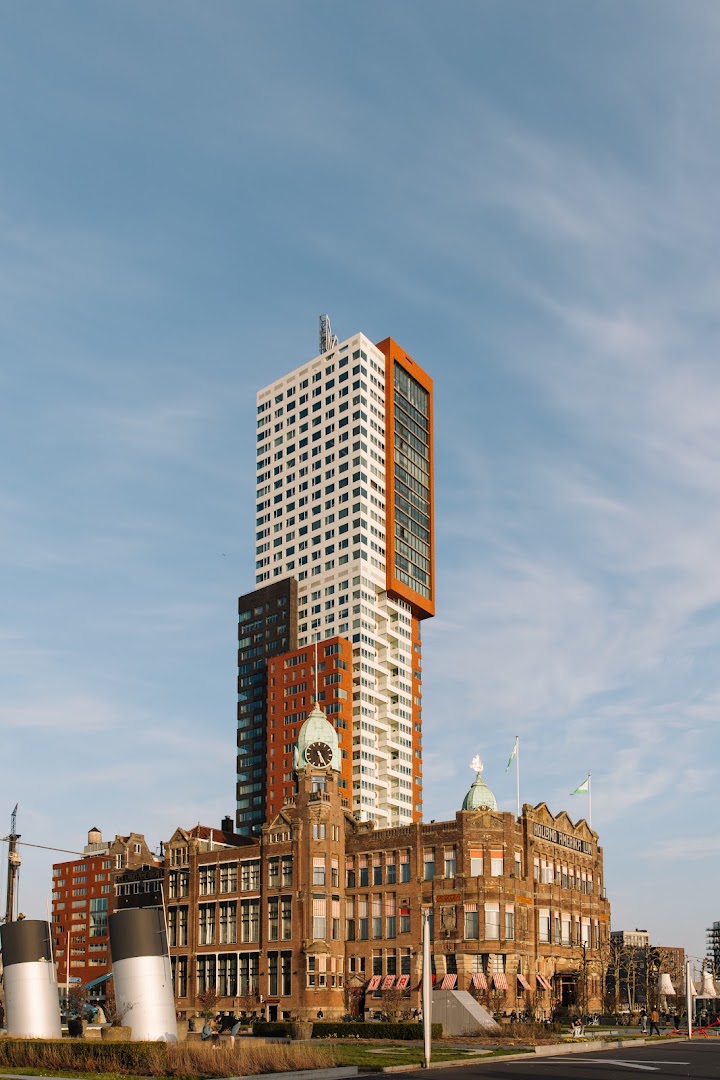
This is the 1901 head office of the Holland America Line, the twin-towered building where hundreds of thousands of emigrants bought their ticket to New York before sailing from the quay outside. The ground-floor cafe keeps the old boardroom fittings and serves until late, and the hotel has its own water taxi stop for the crossing to Veerhaven.

from ~150 EUR/night

Check prices
King Kong Hostel, RotterdamBudget

Gallery-street hostel · Witte de Withkwartier

King Kong Hostel

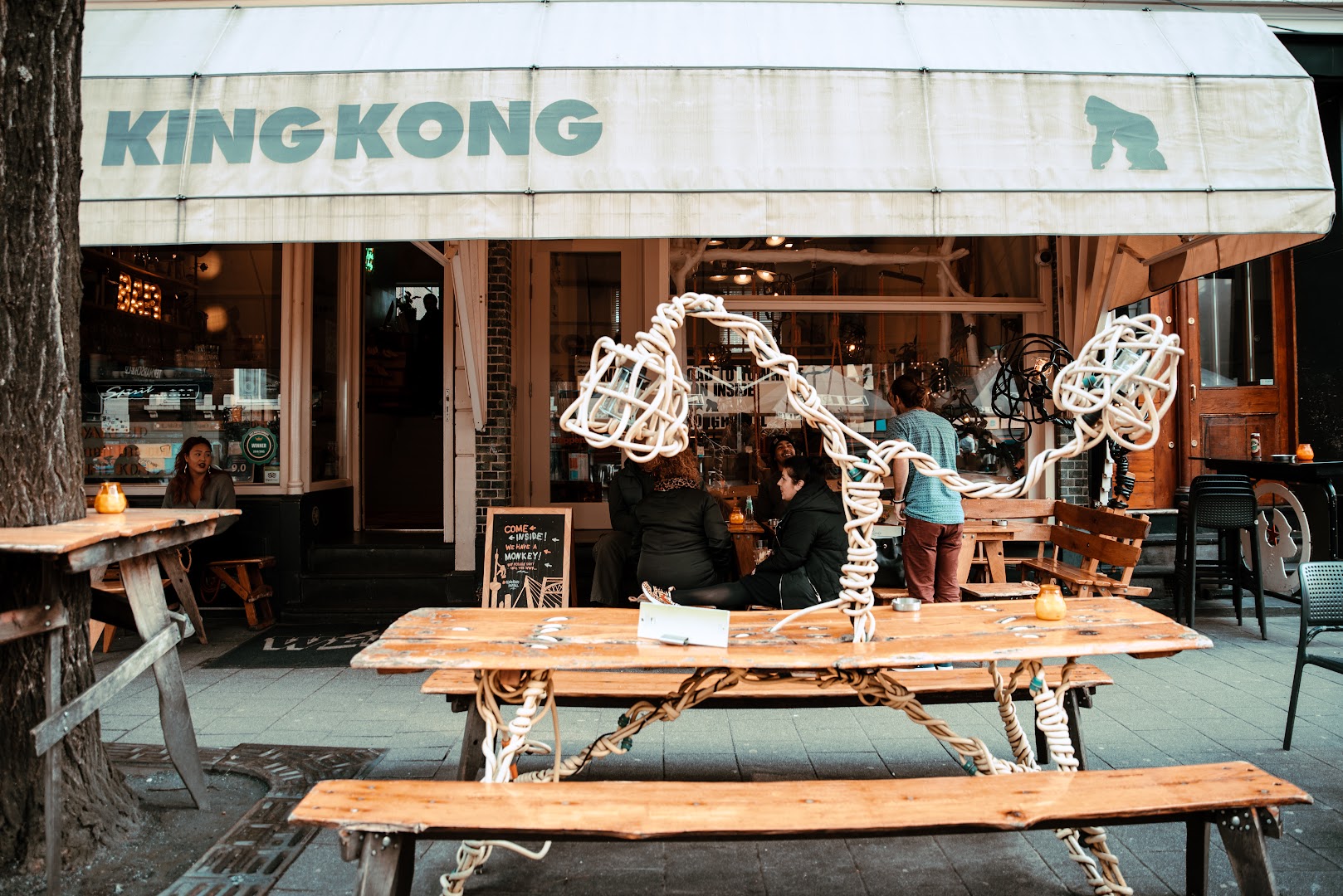
A converted building at Witte de Withstraat 74, halfway along the bar and gallery strip, with dorms, private rooms, a guest kitchen and bikes to rent at the desk. Kunsthal and the Depot are a fifteen-minute walk through the Museumpark, so you can skip transport entirely for a museum day.

from ~32 EUR/night

Check prices

Real hotel photos · prices are indicative from-rates, not live quotes · booking links support the site at no extra cost

D1

Day 1

The rebuilt centre and the Museumpark

Morning

  • Markthal1h

    Begin under the painted ceiling of the Markthal, MVRDV's 2014 horseshoe of apartments arched over a food market, and eat at the counters at the Blaak end where prices drop. Entry is free and the hall opens at 10am on weekdays, noon on Sundays.

    TipMVRDV's 2014 market hall bends a horseshoe of 228 apartments over a covered food market, and the whole 11,000 square metre inner surface is painted with Arno Coenen's digital mural of oversized fruit, flowers and insects, the largest artwork in the Netherlands. Entry costs nothing and the hall opens daily, from 10am on weekdays and noon on Sundays, closing at 8pm most nights and 6pm on Sunday. Come before noon if you want photographs without the crowd, and eat at the small counters at the Blaak end, which are cheaper than the stalls facing the square.

  • Cube Houses45 min

    The Cube Houses are directly across the road, 38 houses tilted onto a corner and lifted above the traffic in 1984. The furnished Kijk-Kubus at Overblaak 70 opens daily from 11am for about 4 EUR if you want to see how you live with slanted walls.

    TipPiet Blom finished these 38 yellow cubes tilted onto their corners in 1984, built as a village on stilts over the traffic at Overblaak so that residents live inside a tipped-up house with slanted walls and windows in the floor. Looking from the street is free at any hour; one unit, the Kijk-Kubus show cube at Overblaak 70, is furnished and open to visitors daily from 11am to 5pm for around 4 EUR, cash or card at the door with no booking. Twenty minutes inside is enough, and the stairs are steep.

  • Rotterdam Centraal station30 min

    Walk fifteen minutes up to Rotterdam Centraal to look at the 2014 station from Stationsplein, a steel hood angled deliberately at the centre with a pine-lined hall and 28,000 square metres of solar cells over the platforms. It costs nothing, the 1957 lettering has been kept above the entrance, and the bike garage below holds over 5,000 bikes.

    TipThe station that opened in 2014 is a piece of civic architecture rather than a shed: a stainless-steel hood angled to point at the city centre, a hall lined in Oregon pine, and a 28,000 square metre roof of solar cells over the platforms. It costs nothing to walk through, the lettering from the 1957 station has been kept above the entrance, and the underground bike garage holds more than 5,000 bikes. Stand on Stationsplein looking back at the point of the roof for the photograph.

Afternoon

  • Depot Boijmans Van Beuningen2h

    Book a timed slot at the Depot Boijmans Van Beuningen, the mirrored bowl in the Museumpark holding around 151,000 works on open racks, roughly 20 EUR, with a birch forest and a restaurant on the roof. The main museum next door has been shut for renovation since 2019 and its reopening has moved more than once, so treat the Depot as the art you can actually see.

    TipThe mirrored bowl that opened in 2021 is the world's first fully accessible art storage building, holding around 151,000 works on racks and in climate rooms you walk between, with a birch forest and a restaurant on the roof. Tickets are roughly 20 EUR with a timed slot, and it matters that this is a depot and not a gallery: you see how art is stored, not a curated hang. Note that the main Museum Boijmans Van Beuningen building next door has been closed for a full renovation since 2019 and its reopening has been pushed back more than once, so check the museum's own site before planning a visit there.

  • Kunsthal Rotterdam1h30

    Cross the park to the Kunsthal, where one ticket of about 16 EUR covers every exhibition running that day inside Koolhaas's 1992 building. Check the programme in advance, because there is no permanent collection to fall back on, and it closes on Mondays outside school holidays.

    TipRem Koolhaas and OMA built this 1992 hall for the Museumpark with no collection of its own, so what is on show changes completely every few months across three or four unrelated exhibitions at once. Tickets are about 16 EUR and cover everything running that day, which makes it good value if you check the programme first and bad value if you walk in blind. It closes on Mondays outside school holidays.

Evening

  • 2h30

    Eat on Witte de Withstraat, ten minutes east, where the galleries thin out into kitchens and bars that stay busy on weeknights. Reserve for 7pm on Friday or Saturday, when the street fills from both the Museumpark and the Maritiem Museum ends.

D2

Day 2

The port, the bridge and the south bank

Morning

  • Spido harbour cruise1h30

    Take the first Spido boat of the day from Leuvehoofd for the 75-minute loop past container terminals, dry docks and shipyards, about 19 EUR. Departures are hourly in summer but only a few a day in winter, so check the timetable the night before rather than walking down on spec.

    TipSpido has been running boats out of Leuvehoofd, at the north foot of the Erasmusbrug, since 1919, and the standard 75-minute tour takes you past the container terminals, dry docks and shipyards that you cannot see from land, for about 19 EUR. Departures are hourly in summer and drop to a few a day in winter, so check the timetable rather than turning up. Sit on the open upper deck and dress warmer than the temperature suggests, because the wind on the water is relentless.

  • Maritiem Museum and the museum harbour1h15

    Spend half an hour along the free museum harbour at Leuvehaven, where roughly twenty historic cranes, tugs and inland barges sit at the quay, then decide whether to pay the roughly 18 EUR for the indoor Maritiem Museum. It works best with children or in bad weather, and it closes on Mondays outside holidays.

    TipThe indoor museum at Leuvehaven explains how the Rhine delta turned into the biggest port in Europe, with a hands-on section that works well for children, but the part many people miss is outside and free: the museum harbour moors around twenty historic cranes, tugs and inland barges along the quay, open to walk at any hour. Indoor tickets are roughly 18 EUR and the museum closes on Mondays outside holidays. Allow an hour outside before you pay for anything.

Afternoon

  • Erasmusbrug30 min

    Walk the Erasmusbrug, 802 metres and about ten minutes, under the asymmetric pylon that the city calls the Swan. The hour before sunset gives the best light from the north bank at Boompjeskade if you want to come back for the photograph.

    TipUNStudio's bridge opened in 1996, 802 metres long with a 139 metre asymmetric pylon that gave it the local nickname De Zwaan, the Swan, and its southern span is a bascule lift that opens for tall ships. Walking across is free and takes about ten minutes, and the best light is the hour before sunset from the north bank at Boompjeskade. If the barriers come down, wait rather than reroute: a lift takes only a few minutes and you get to watch the deck swing up.

  • Fenix2h30

    Head south into Katendrecht for Fenix, the 2025 migration museum in a rebuilt warehouse on the old Holland America quay, where the Tornado staircase corkscrews through the roof to a platform over the water. About 19 EUR covers the museum and the roof, and Deliplein next door is where to eat on this bank.

    TipThis museum of migration opened in 2025 inside a rebuilt Fenix warehouse in Katendrecht, on the quay where the Holland America Line loaded emigrants, and its centrepiece is the Tornado, a double-helix steel staircase by MAD Architects that spirals out through the roof to a viewing platform over the harbour. Tickets are around 19 EUR and include the staircase and the roof. Combine it with lunch on Deliplein, five minutes away, and reach it on foot from Hotel New York in about ten minutes.

Evening

  • Wilhelminapier towers2h

    Finish along the Wilhelminapier, past De Rotterdam, the leaning KPN tower and the twin-towered 1901 Holland America Line building that is now Hotel New York, then cross back by water taxi for a few euros. Five minutes on the river at dusk beats any rooftop bar in the city for the view.

    TipA single pier on the south bank holds Rem Koolhaas and OMA's stacked De Rotterdam, Renzo Piano's leaning KPN tower, Mecanoo's Montevideo and the 1901 brick offices of the Holland America Line, now Hotel New York. Walking the length of it is free and takes twenty minutes, and the cheapest way to arrive is the water taxi from Veerhaven or Leuvehaven, which crosses in about five minutes for a few euros per person. The old departure hall at Hotel New York is open to non-guests for coffee.

D3

Day 3

Old Delfshaven, height and green space

Morning

  • Historic Delfshaven2h

    Take the metro eight minutes west to Delfshaven, the harbour the 1940 bombing missed, for leaning brick warehouses, gabled houses and wooden boats on the water. The Pelgrimvaderskerk on the quay held the Pilgrims' last service before they sailed on the Speedwell in July 1620; it opens only a few afternoons a week and asks for a donation, so check before building the morning around it.

    TipThis narrow harbour survived the 1940 bombing intact, which is why it is the only place in Rotterdam with leaning brick warehouses, gabled houses and moored wooden boats. The Pelgrimvaderskerk on the quay is where the Pilgrims held their last service before sailing on the Speedwell in July 1620 to join the Mayflower in England; the church keeps limited opening hours, usually a few afternoons a week, and asks only for a donation. The harbour itself is free and best at dusk, and metro station Delfshaven is eight minutes from Blaak.

Afternoon

  • Euromast1h30

    Ride the Euromast, built for the 1960 Floriade and raised to 185 metres in 1970, for the only view that holds the port, the bridges and the centre in one frame. Book online for about 15 EUR and go in the first hour after opening, because the queue is at its worst between 1pm and 4pm in July and August.

    TipBuilt for the 1960 Floriade and extended in 1970 with the rotating Euroscoop capsule, the mast reaches 185 metres and gives the only view that takes in the port, the bridges and the city at once. Tickets run about 15 EUR, cheaper booked online, and the queue is worst between 1pm and 4pm in July and August, so aim for the first hour after opening. In summer the tower also runs abseiling and a rope slide from the platform, booked separately.

  • Kralingse Plas and the snuff mills2h30

    Swap the tower for green space if the cloud is low: the Kralingse Plas is twenty minutes east, free at any hour, with a lakeside path of about an hour on foot and two working snuff mills on the south shore. De Ster opens to visitors on Saturday afternoons and sells what it has ground that week.

    TipThe lake east of the centre is ringed by woodland and has two working mills on its southern shore, De Ster and De Lelie, which still grind snuff and spices between millstones. The path around the water is free at any hour and takes about an hour on foot or twenty minutes by bike, and De Ster opens to visitors on Saturday afternoons, when you can buy what it has ground that week. Swimming is allowed from the beach at the western end in summer.

Evening

  • 2h30

    Eat back in Delfshaven or on Deliplein in Katendrecht rather than in the centre: both are cheaper for the same quality and quieter after nine. If you would rather spend the last evening on the water, the water taxi runs late and the Erasmusbrug is lit from dusk.

Where to sleep for this itinerary

For 3 days, base yourself in Centrum and the Lijnbaan. This is the rebuilt heart, running from Rotterdam Centraal down the Coolsingel to Blaak, and it holds most of what a short trip needs within a ten-minute walk. The Markthal, the Cube Houses, the Laurenskerk and the 1953 Lijnbaan shopping street are all here, along with the metro and rail interchange at Blaak. It is functional rather than pretty, and that is the honest character of the city. Compare all neighborhoods in the full where-to-stay guide.

Hotels in Centrum and the Lijnbaan
Loading hotel map…
Map shows live hotel prices. Open the full hotel search. Booking through it supports the site at no extra cost.

Short on time?

Rotterdam in 2 days

Quick questions, straight answers

QIs 3 days enough for Rotterdam?

Three days lets Rotterdam breathe, and the extra day is the one that shows you what the bombing spared. Day one takes the rebuilt centre, the Markthal, the Cube Houses and the Museumpark with the Depot and the Kunsthal. Day two is the water: a Spido cruise through the port, the walk over the Erasmusbrug, the Wilhelminapier towers and the Fenix migration museum in Katendrecht.

QWhere should I stay for 3 days in Rotterdam?

Base yourself in Centrum and the Lijnbaan for this itinerary. This is the rebuilt heart, running from Rotterdam Centraal down the Coolsingel to Blaak, and it holds most of what a short trip needs within a ten-minute walk. The Markthal, the Cube Houses, the Laurenskerk and the 1953 Lijnbaan shopping street are all here, along with the metro and rail interchange at Blaak. It is functional rather than pretty, and that is the honest character of the city.

QWhen is the best time for this Rotterdam itinerary?

The plan works year round, but May, June, July give you the best weather-to-crowds ratio.