PerfectCityBreak
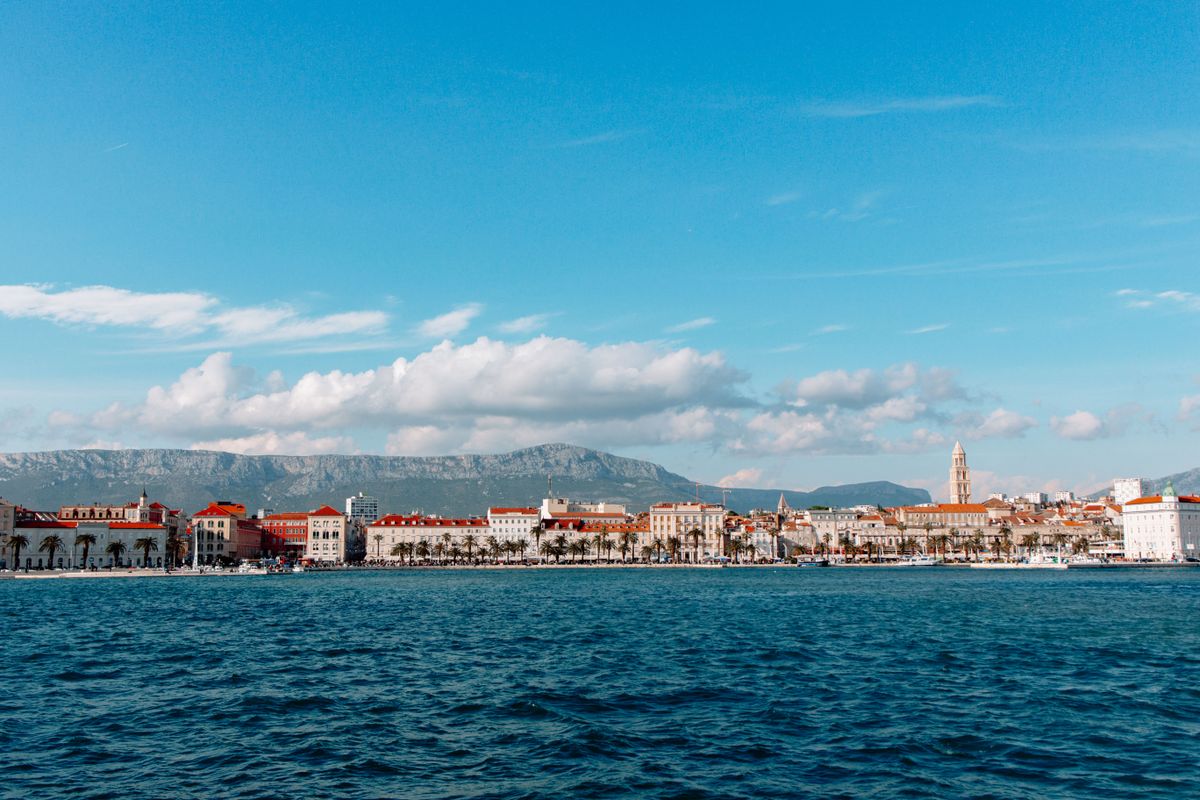
The Split waterfront and old town with the cathedral bell tower and the Mosor mountains behind, seen from the sea
Croatia2 days ideal

Split

A living Roman palace on the Dalmatian coast, with marble lanes, the seafront Riva and a gateway to the islands.

City break passSPU · CROATIA

Split works best as a 2-day city break. Split's old town is not next to a Roman ruin, it is inside one: the whole centre sits within the walls of Diocletian's fourth-century palace, still lived in, with cafes and apartments built into the imperial stone. You cover it entirely on foot, from the marble Riva promenade along the harbour to the Peristyle square at its heart. It also makes the best base on the coast for the Dalmatian islands of Hvar, Brac and Vis, plus Trogir and the Krka waterfalls, all reachable on a day trip. It is hot and packed in high summer and calmer in spring and autumn, and Game of Thrones fans will find its cellars and nearby Klis fortress on screen. This guide splits two or three days so you see the core without melting in the queues.

Ideal stay

2 days

Best months

May · Jun · Sep

Mid budget

120 EUR/day

Airport

Split airport sits about 25km west of the centre near Kastela and Trogir

Where we would sleep in Split

Four picks that cover the realistic range, from splurge to budget. Prices are low-season starting points; check live rates for your dates.

See all Split hotels
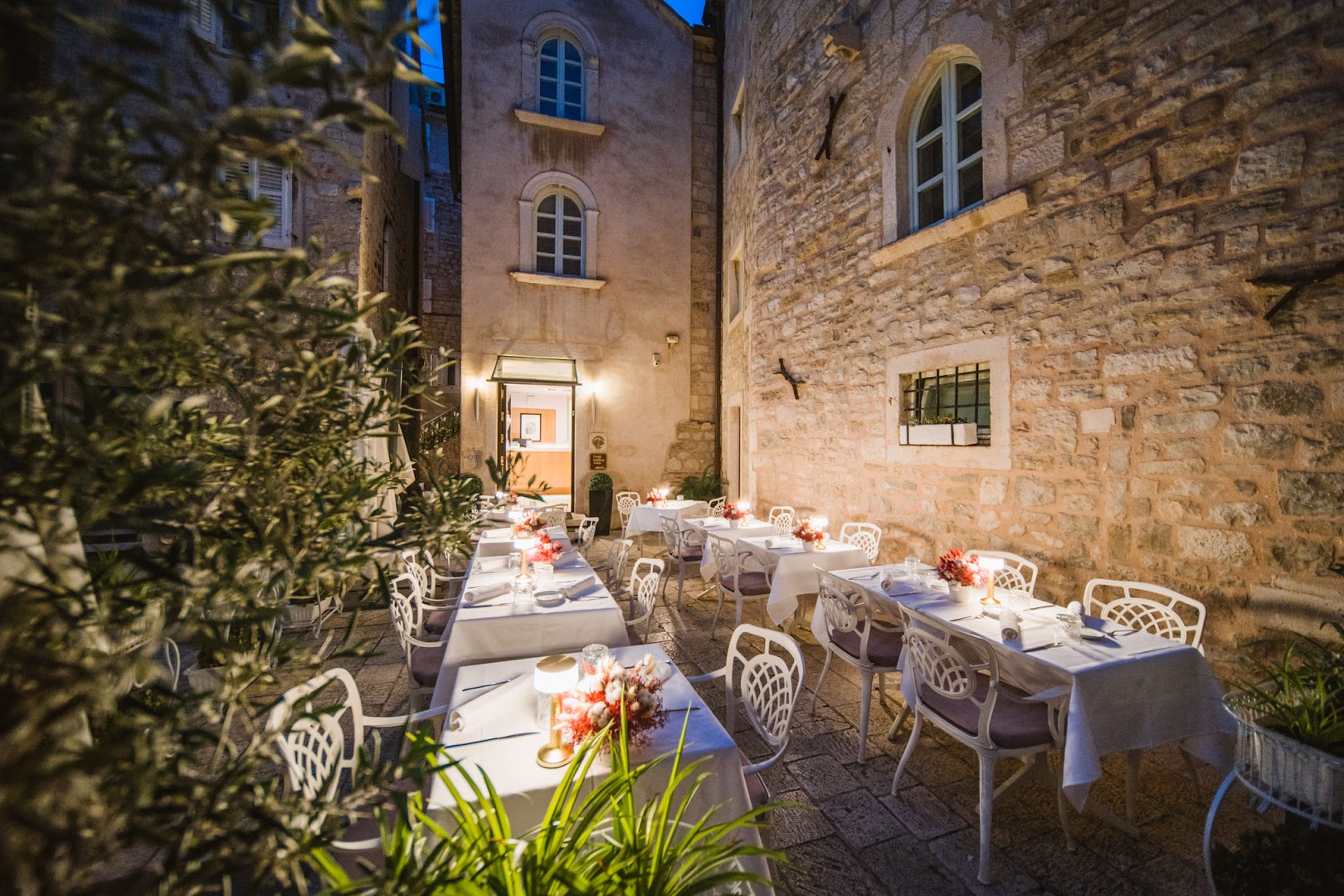
Vestibul Palace Hotel, SplitSpecial occasions€€€

Inside the Roman palace · Diocletian's Palace (Old Town)

Vestibul Palace Hotel

A small design hotel built into the ancient stone of Diocletian's Palace, steps from the Vestibule and the Peristyle at the very heart of the old town. Exposed Roman and medieval walls meet clean modern rooms, and you sleep inside the monument itself.

from ~260 EUR/night

Check prices
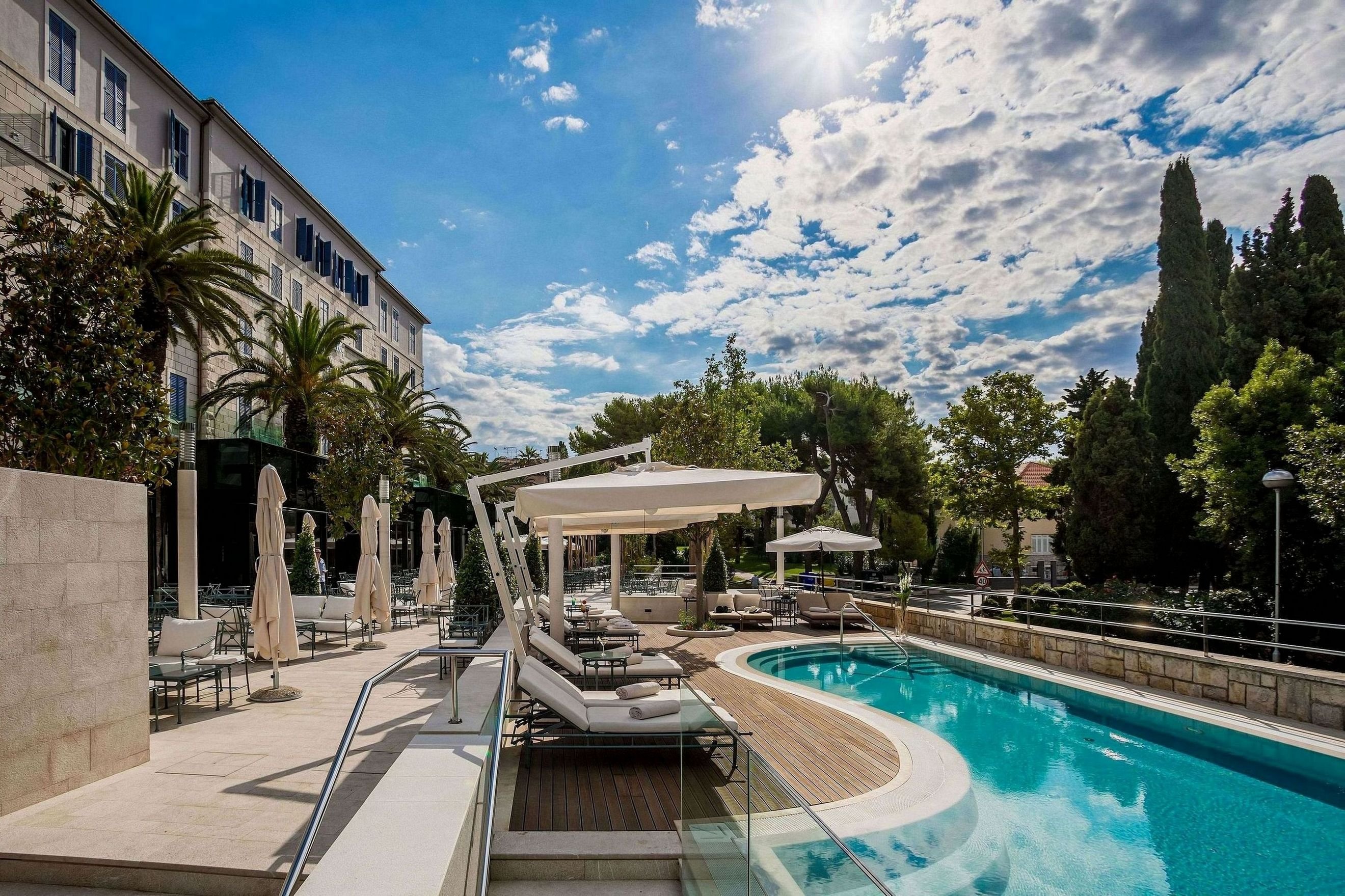
Hotel Park Split, SplitCouples€€

Belle Epoque by the beach · Bacvice

Hotel Park Split

A restored 1921 grand hotel above Bacvice beach, with a palm-shaded terrace and a short walk along the water to the old town. It is the elegant, calmer choice, close to the sand but out of the palace crush.

from ~165 EUR/night

Check prices
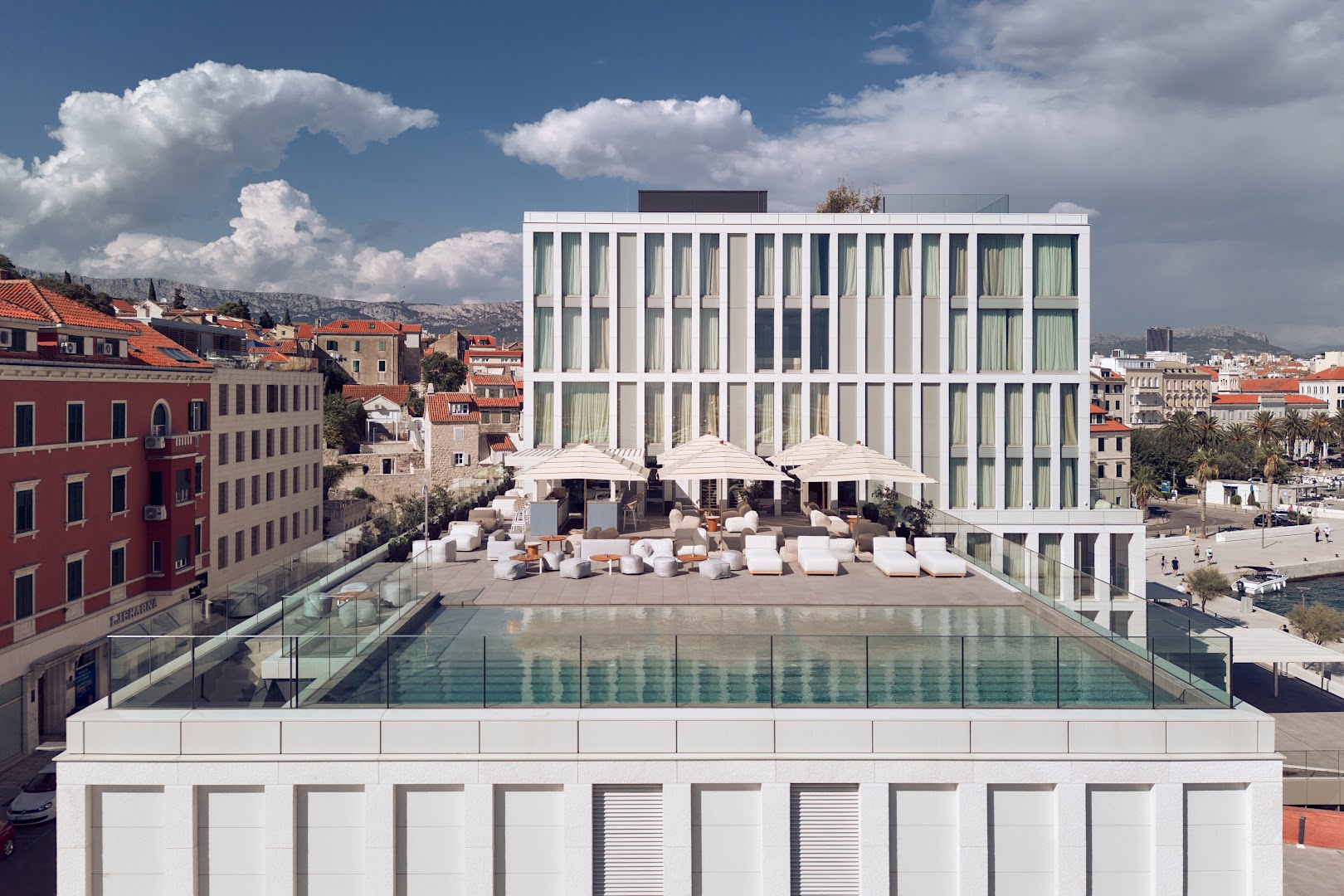
Hotel Ambasador, SplitFirst visit€€

Seafront modern · Riva and Meje

Hotel Ambasador

A modern four-star on the western waterfront toward Meje, with sea-view rooms and a rooftop looking back to the harbour. It is a flat ten-minute walk along the coast to the Riva and the palace, away from the night noise.

from ~140 EUR/night

Check prices
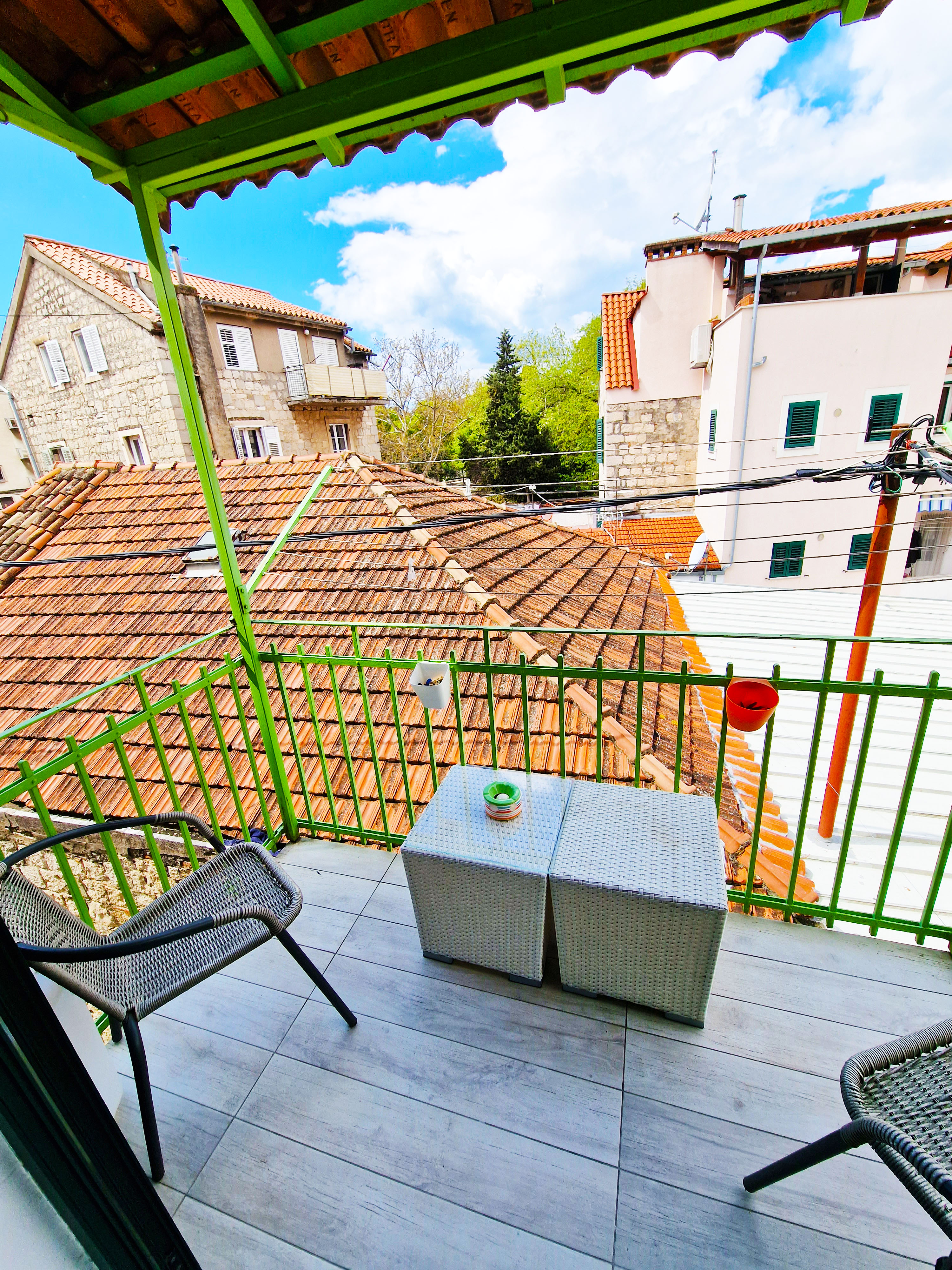
CroParadise Green Hostel, SplitBudget

Varos hostel · Varos

CroParadise Green Hostel

A friendly, well-run hostel in a stone house in the old Varos quarter just west of the centre, with dorms and a couple of private rooms and apartments. It is a five-minute walk to the Riva and one of the best-value beds in Split.

from ~25 EUR/night

Check prices

Real hotel photos · prices are indicative from-rates, not live quotes · booking links support the site at no extra cost

Hotel prices right now

Hotels in Split
Loading hotel map…
Map shows live hotel prices. Open the full hotel search. Booking through it supports the site at no extra cost.

A little history

Split grew, uniquely, inside a Roman palace: the emperor Diocletian, the only Roman ruler to give up the throne voluntarily, built a vast fortified retirement palace here around AD 305, and when nearby Salona fell to invaders the refugees simply moved into its walls and never left. Seventeen centuries later people still live and trade inside the palace, its cathedral is Diocletian's own mausoleum, and its cellars survive almost intact. The city passed through Byzantine, Venetian, Habsburg and briefly Napoleonic hands, spent the 20th century in Yugoslavia, and became Croatian in 1991. Today Split is Dalmatia's boisterous capital, a port and the gateway to the islands, as known for its fervent Hajduk football and its picigin beach game as for its Roman stones.
Split is known for

  • Diocletian's Palace
  • The Riva
  • St Domnius bell tower
  • Marjan hill
  • Dalmatian islands
  • Game of Thrones sites

How many days in Split?

Pick the itinerary that matches your trip. Each one is a full day-by-day plan, not a list of 30 things to squeeze in.

Where to stay in Split

Split has a walkable center, so the neighborhood you pick sets the tone of the whole trip.

Full comparison

Split, month by month

Colored months are the sweet spot. Struck-through months come with a warning. Each page covers weather, crowds, prices and what to pack.

Tight budget?

Split on a budget: same trip, around 60 EUR a day

Read the budget guide →

Pairs well with

Quick questions, straight answers

QHow many days do you need in Split?

2 days is the sweet spot for Split. The old town is tiny and entirely on foot, so the Peristyle, the cathedral and its bell tower, the cellars, the Riva, the markets and the Golden Gate all fit without a rush, plus a morning climb up Marjan hill and an afternoon swim at Bacvice

QWhen is the best time to visit Split?

The best months are May, June, September, October. Think twice about July / August: Peak heat, peak prices and peak crowds collide at highs near 30C, with the huge Ultra Europe electronic-music festival taking over the Poljud stadium in mid-July and rooms selling out for it. The Split Summer Festival also runs open-air theatre and opera in and around the palace through July and August, so book far ahead and expect the lanes and ferry queues packed at midday.

QIs Split expensive?

Split sits around the European average. Plan roughly 60 EUR per day on a tight budget, 120 EUR for a comfortable mid-range trip, and 240 EUR and up if you want top hotels and restaurants.

QWhere should first-timers stay in Split?

Diocletian's Palace (Old Town) is the safest first-visit base. Sleeping inside the palace walls puts you on the atmospheric marble lanes with the Peristyle, the cathedral and the Riva at your door, and the old town turns quiet and floodlit once the day crowds thin. It is the most central and atmospheric base, though the same lanes that charm by day can be noisy with bars and restaurants late into the night. Pick it when it is your first visit, time is short and you want to wake up in the middle of the history.

QIs Split easy to get around?

Yes. Split has a walkable center, so most of a short trip is done on foot. Split airport sits about 25km west of the centre near Kastela and Trogir, so every route into town takes a while. The dedicated airport shuttle bus reaches the centre and the harbour in roughly 30 to 40 minutes for around 8 EUR, with tickets sold on board, and it is the simplest option for most arrivals. Cheaper but slower is the Promet city bus line 37, which runs to the main bus station via Trogir for a couple of euros but crawls through the suburbs in about 50 minutes. A taxi into the centre is roughly 30 to 40 EUR and worth splitting across a group. There is no metro and no airport train.

QHow do I get from the airport to the center of Split?

Split airport sits about 25km west of the centre near Kastela and Trogir, so every route into town takes a while. The dedicated airport shuttle bus reaches the centre and the harbour in roughly 30 to 40 minutes for around 8 EUR, with tickets sold on board, and it is the simplest option for most arrivals. Cheaper but slower is the Promet city bus line 37, which runs to the main bus station via Trogir for a couple of euros but crawls through the suburbs in about 50 minutes. A taxi into the centre is roughly 30 to 40 EUR and worth splitting across a group. There is no metro and no airport train. It is the cheapest and usually the fastest option.

QWhat is Split known for?

Split is best known for Diocletian's Palace, The Riva, St Domnius bell tower, Marjan hill, Dalmatian islands, Game of Thrones sites. Split grew, uniquely, inside a Roman palace: the emperor Diocletian, the only Roman ruler to give up the throne voluntarily, built a vast fortified retirement palace here around AD 305, and when nearby Salona fell to invaders the refugees simply moved into its walls and never left.