PerfectCityBreak
Day-by-day planCroatia

Zagreb in 2 days

2-day itineraryZAG · CROATIA

Two full days is enough for the whole of central Zagreb, because both halves of the old city are small and the walk between them takes ten minutes or one 55-second funicular ride. Day one covers the Upper Town, from Dolac market at breakfast to St Mark's tiled roof, the noon cannon at the Lotrscak Tower and the Museum of Broken Relationships, ending on the Tkalciceva terraces. Day two takes the Lower Town, walking the Lenuci Green Horseshoe of linked parks, then out to the Mirogoj arcades by bus 106 and back for a long Zagreb coffee. The thing that catches people out is the Monday closure: most museums here shut on Mondays, including the Lotrscak Tower, so if your trip straddles one, spend it on markets, parks and the Museum of Broken Relationships, which opens daily. Base yourself in the Upper Town for atmosphere or Kaptol for the shortest walk to everything. What you give up at this pace is the green edge of the city, so no Maksimir, Jarun or Sljeme. For those, take the three-day version.

Duration

2 days

Base

Gornji Grad (Upper Town)

Mid budget

220 EUR

Best months

May · Jun · Sep

Sleep well for these 2 days

Picks sorted with our recommended base, Gornji Grad (Upper Town), first. Book early: the good-value rooms go weeks ahead.

See all Zagreb hotels
Hotel Jagerhorn, ZagrebFirst visit€€

Oldest hotel in town · Gornji Grad (Upper Town)

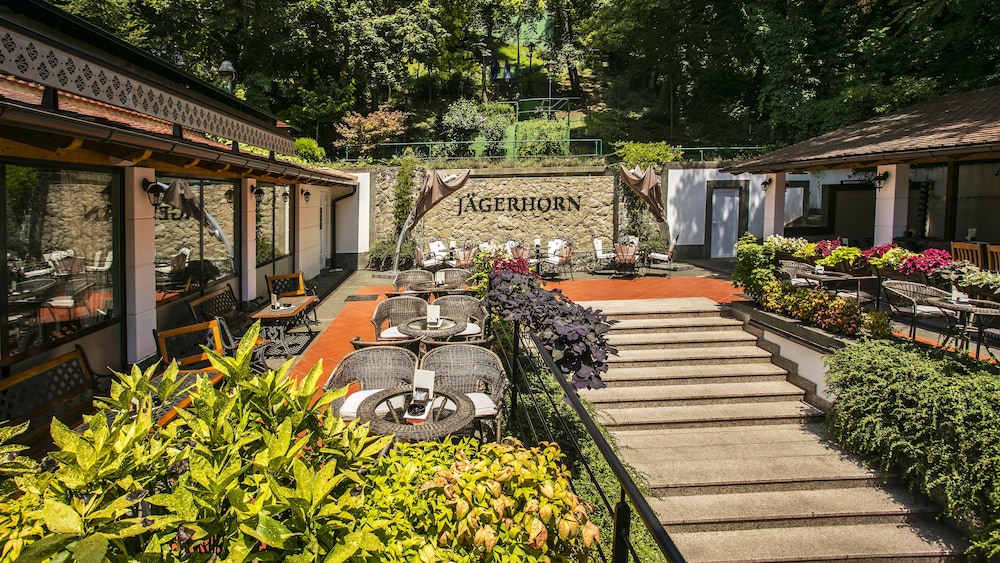
Hotel Jagerhorn

Zagreb's oldest hotel, trading since 1827, hidden up a passage off Ilica with a terrace backing straight onto the wooded Gradec slope. Rooms are small and plain, but you step out of the door onto the main street and are under the Upper Town in two minutes.

from ~120 EUR/night

Check prices
Esplanade Zagreb Hotel, ZagrebCouples€€€

Art deco grand hotel · Donji Grad (Lower Town)

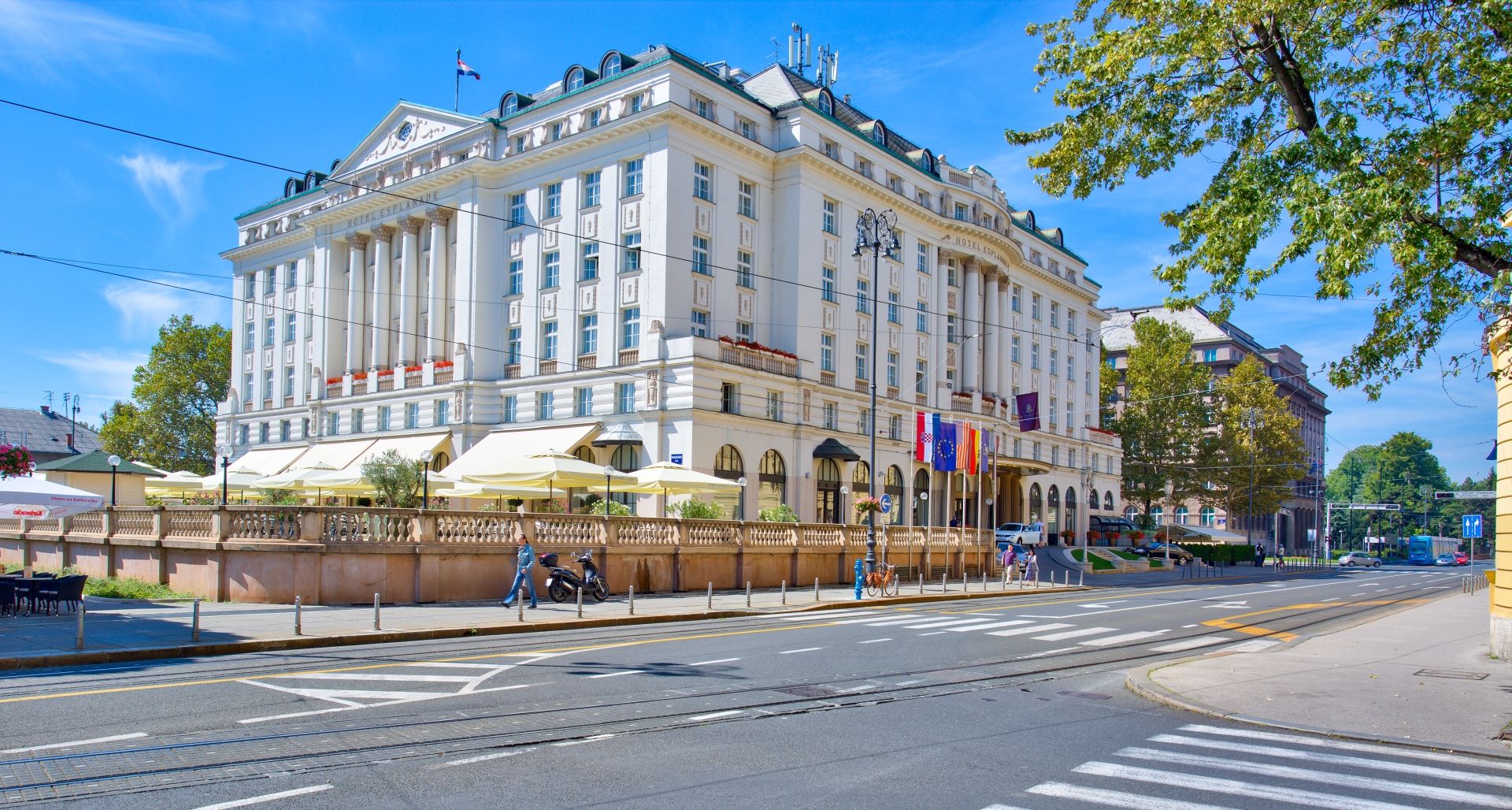
Esplanade Zagreb Hotel

Opened in 1925 to put up Orient Express passengers breaking their journey between Paris and Istanbul, and still the address every Zagreb local names first. It sits directly across from the main train station, so the Lower Town museums and Ban Jelacic square are a flat ten-minute walk.

from ~190 EUR/night

Check prices
Canopy by Hilton Zagreb City Centre, ZagrebDesign lovers€€

Design hotel with a garden · Donji Grad (Lower Town)

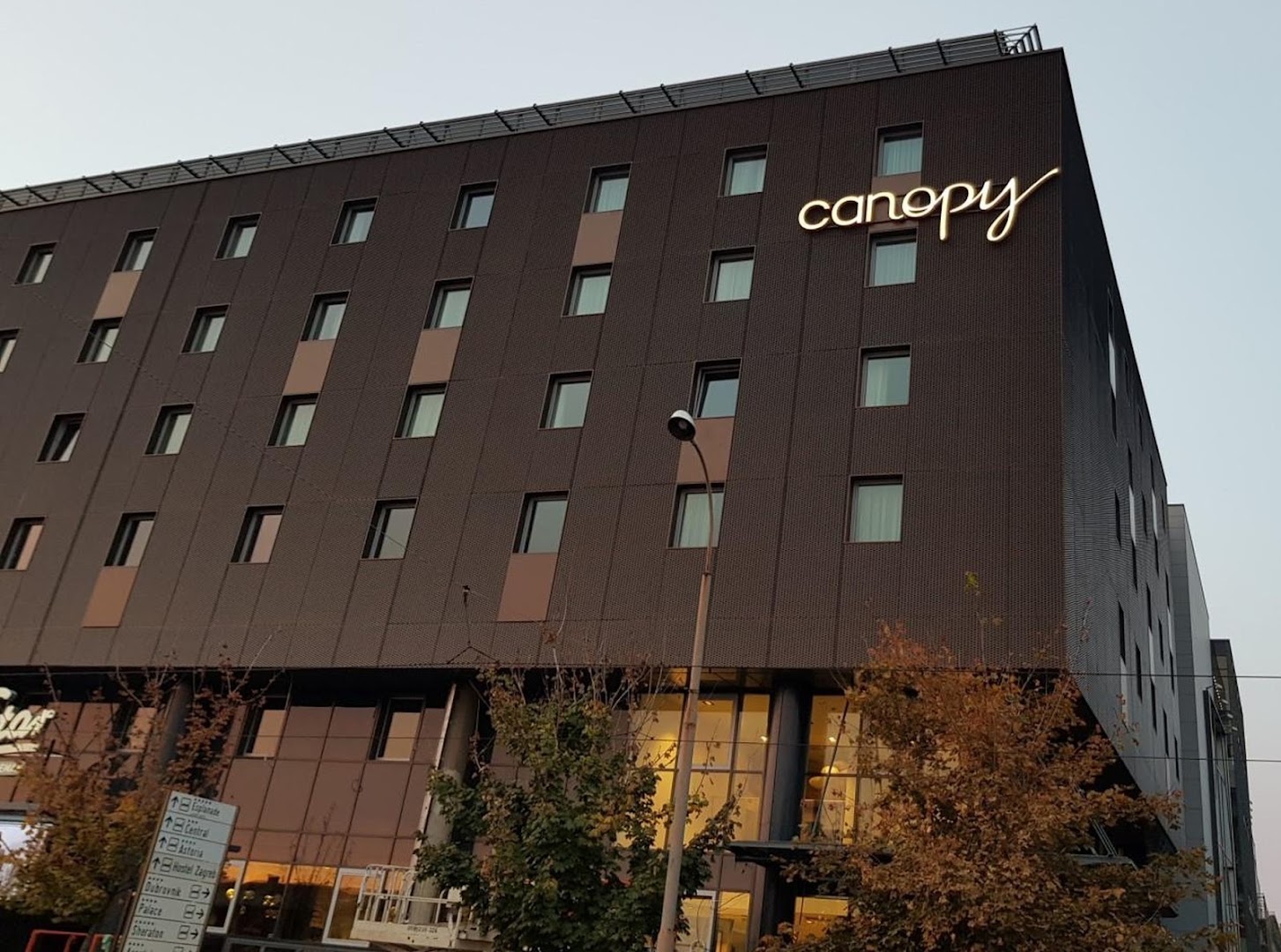
Canopy by Hilton Zagreb City Centre

A bright contemporary hotel built around a planted interior courtyard on Branimirova, a few minutes east of the train station. The ground-floor bar and bakery pull in as many Zagreb residents as guests, which is a fair test of a city-centre hotel.

from ~140 EUR/night

Check prices
Swanky Mint Hostel, ZagrebBudget

Converted dye factory · Britanski Trg and Ilica

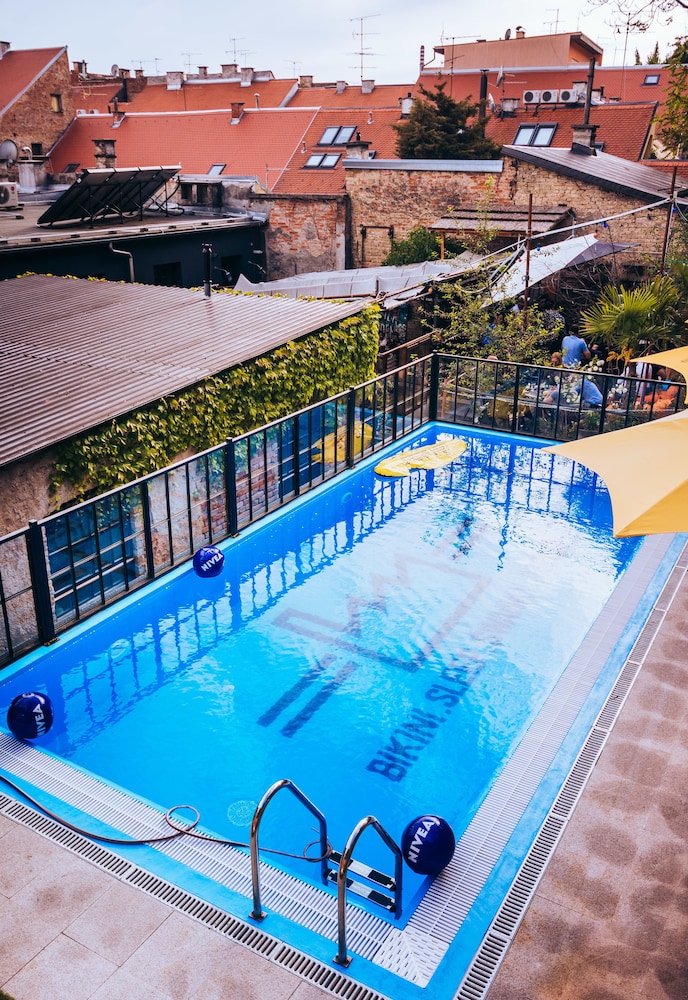
Swanky Mint Hostel

Set in a 19th-century textile dyeing and mint factory on Ilica, with the old machinery left in place around a courtyard bar and a small plunge pool. Dorms and private rooms sit above one of the livelier hostel bars in the city, so ask for a courtyard-facing room if you want quiet.

from ~35 EUR/night

Check prices

Real hotel photos · prices are indicative from-rates, not live quotes · booking links support the site at no extra cost

D1

Day 1

Dolac, the Upper Town and the noon cannon

Morning

  • Dolac Market1h

    Start at Dolac market on its terrace above Ban Jelacic square between 7am and 10am, when the red parasols are all up and the stalls are still full. Buy fresh cheese with cream in the covered dairy hall for the standard Zagreb breakfast, then look into the fish market underneath.

    TipZagreb's open-air market has run on this raised terrace above Ban Jelacic square since 1930, its stalls shaded by the red parasols that have become the city's unofficial symbol, with the covered dairy hall and the fish market (Ribarnica) tucked underneath. Come between 7am and 10am on a weekday for full stalls and real shoppers, because it winds down by early afternoon and closes earlier on Sunday, and buy fresh cheese with cream (svjezi sir i vrhnje) from the dairy hall for the classic Zagreb breakfast.

  • Zagreb Cathedral30 min

    Walk two minutes east to Zagreb Cathedral on Kaptol, the tallest building in Croatia, still wrapped in scaffolding after the March 2020 earthquake took the top off its south spire. Entry is free when the interior is open, but check access on the day because the restoration keeps changing it.

    TipThe neo-Gothic cathedral on Kaptol is the tallest building in Croatia and its twin spires define the skyline, but the earthquake of 22 March 2020 snapped the top of the south spire and restoration work has kept the building wrapped in scaffolding and cranes ever since. Entry is free when the interior is open, access has changed repeatedly during the works so check on the day rather than assuming, and the medieval Glagolitic inscription on the north wall and the tomb of Cardinal Stepinac are the things to look for inside.

  • Zagreb Funicular15 min

    Cut back through to Tomiceva street and ride the 1890 funicular up to the Upper Town, 66 metres in about 55 seconds for well under a euro. It is one of the shortest public funiculars in the world and the fastest way onto the hill with no stairs.

    TipRunning since 1890 and just 66 metres long, this is one of the shortest public funiculars anywhere and the ride from Tomiceva street up to the Lotrscak Tower takes about 55 seconds. Cars leave every 10 minutes from around 6:40am to 10pm, a single ticket costs well under a euro bought at the booth, and it is a protected cultural monument in its own right, so ride it up and walk the Strossmayer promenade back down for the view.

Afternoon

  • Lotrscak Tower and the Gric Cannon1h

    Be at the Lotrscak Tower by 11:45am to climb before the Gric cannon fires at exactly midday, as it has every day since 1877, and stay on the terrace for the best rooftop panorama in Zagreb. Entry is around 3 EUR and the tower is closed on Mondays.

    TipA cannon has been fired from the top of this thirteenth-century tower at exactly midday every single day since 1877, originally to synchronise the city's church bells, and the blast is genuinely loud enough to make first-timers jump. The tower is open Tuesday to Sunday and closed Mondays, entry is around 3 EUR, and the terrace gives the best rooftop panorama in the city, so climb the stairs by 11:45am if you want to be up there when it goes off, or stand on the Strossmayer promenade below to watch instead.

  • St Mark's Church and Markov Trg30 min

    Walk three minutes north to Markov trg for St Mark's Church and its 1880 tiled roof, carrying the arms of Croatia, Dalmatia and Slavonia beside the white castle of Zagreb. The square is free and open all hours, the interior generally only around Mass, and the parliament and government sit either side.

    TipThe tiled roof laid in 1880 carries two coats of arms in coloured glazed tiles, the medieval arms of Croatia, Dalmatia and Slavonia on the left and the white castle of Zagreb on the right, and it is the single most photographed thing in the city. The square is free and open at all hours but the church interior is generally only accessible around Mass times, so shoot the roof between 7am and 9am before the tour groups arrive, and note that the buildings either side are the Croatian parliament and government so there is a permanent police presence and no tripods.

  • Museum of Broken Relationships1h15

    Two minutes downhill on Cirilometodska, give the Museum of Broken Relationships a proper hour: donated objects from strangers worldwide, each with the story of the breakup it outlived. It opens daily and stays open into the evening, so it also works as a fallback if the weather turns.

    TipZagreb's most original museum displays objects donated by strangers worldwide alongside the story of the breakup they survived, an idea that won the European Museum of the Year Kenneth Hudson Award in 2011. It is on Cirilometodska in the Upper Town, open every day (roughly 9am to 10pm in summer and 9am to 9pm the rest of the year) so it works as a rainy-afternoon or late-evening stop when everything else has shut, and entry runs around 7 EUR with a cafe next door that shares the joke.
Evening

  • Zagreb 80s Museum45 min

    Drop into the Zagreb 80s Museum on Radiceva on the way back downhill, a recreated Yugoslav-era flat where you are meant to touch everything, dial the phone and play the arcade console. About 45 minutes and roughly 6 EUR, and it sits directly on the route.

    TipThis small museum on Radiceva recreates a Yugoslav-era flat from the decade of the 1984 Sarajevo Winter Olympics, and unlike almost every other museum you are invited to touch everything: sit on the sofa, dial the rotary phone, put a record on the turntable and play the arcade console. It is open daily until early evening, costs around 6 EUR, takes about 45 minutes and sits directly on the walk between Ban Jelacic square and the Upper Town, so it slots in without a detour.

  • Tkalciceva Street2h30

    Finish on Tkalciceva, the pastel bar strip that was a covered-over stream until 1898, at its best from about 8pm. Sit one block up in the Upper Town rather than on the strip itself if you want local prices on the same beer.

    TipThis pedestrian strip of pastel houses between Kaptol and the Upper Town was a stream called the Medvescak until it was covered over in 1898, and the bridge that once crossed it survives in the name of Krvavi most, the Blood Bridge lane linking it to Radiceva. It is now the densest run of bars and terraces in Zagreb, best from about 8pm when the tables fill, and prices drop noticeably if you walk one block up into the Upper Town instead of sitting on the strip itself.

D2

Day 2

The Green Horseshoe and the Mirogoj arcades

Morning

  • Advent and Ban Jelacic Square30 min

    Begin on Ban Jelacic square by the 1866 equestrian statue and the Manduseva fountain, the point every tram line and every local meeting runs through. In December this is the centre of the Advent market that was voted Europe's best from 2016 to 2018.

    TipBan Jelacic square is the city's meeting point year round, marked by the 1866 equestrian statue and the Manduseva fountain, and from late November to early January it anchors the Advent market that was voted Europe's best three years running from 2016 to 2018. The market spreads across the square, Zrinjevac, the ice rink on King Tomislav square and the Upper Town, entry is free everywhere, and weekday evenings before 6pm are the only time it is not shoulder to shoulder, so go early and pay with card since the stalls are cashless in places.

  • 1h30

    Walk south into the Lower Town and follow the Lenuci Green Horseshoe, the U of eight linked parks laid out in the 1880s: Zrinjevac with its plane trees, bandstand and meteorological column first, then Strossmayer square and King Tomislav square down to the yellow railway station. It is flat, shaded and free, and the museums lining it are the ones to duck into if it rains.

  • Zagreb Botanical Garden1h

    From the station, cross to the Botanical Garden, the bottom leg of the horseshoe, founded in 1889 and still run by the university. It is only open roughly April to October, shuts on Mondays and costs a couple of euros, so skip it in winter and walk the horseshoe back up instead.

    TipFounded in 1889 and still run by the university's science faculty, this five-hectare garden of English-style lakes and glasshouses forms the bottom leg of the Lenuci Green Horseshoe, a short walk from the main railway station. It is closed through the winter and generally opens from around the start of April to the end of October, shuts on Mondays, and entry is a couple of euros, so treat it as a spring or autumn stop and a genuinely quiet one, since almost no visitors walk this far down the horseshoe.

Afternoon

  • 1h45

    Take a long lunch and then a proper Zagreb coffee, which here means one drink and an hour of sitting, ideally on the Cvjetni trg terraces or Bogoviceva. On Saturday morning this same stretch is the spica, the see-and-be-seen coffee ritual that fills every chair in the centre.

  • Mirogoj Cemetery1h30

    Catch ZET bus 106 from the eastern side of the cathedral and ride about 10 minutes up to Mirogoj, Hermann Bolle's monumental cemetery of ivy-covered domes and arcades, shared without division between Catholic, Orthodox, Muslim, Jewish and secular graves. Entry is free and an hour is enough.

    TipHermann Bolle designed this cemetery in the 1870s as a monumental arcade of ivy-covered domes and colonnades north of the city, and it is shared without division between Catholic, Orthodox, Muslim, Jewish and non-religious graves, which says more about Zagreb than any museum. Entry is free, it opens around 6am to 8pm in summer and 7:30am to 6pm in winter, and ZET bus 106 from the eastern side of the cathedral gets you there in about 10 minutes, so allow an hour and go on a bright morning when the light cuts through the arcades.

Evening

  • Museum of Contemporary Art (MSU)1h45

    If you still have energy, tram 6 or 14 across the Sava to the Museum of Contemporary Art in Novi Zagreb for Carsten Holler's Double Slide, the steel tubes you ride from the upper floors down through the building. It closes Mondays, so confirm the day before you cross the river.

    TipCroatia's largest modern-art museum sits across the Sava in Novi Zagreb in a building by Igor Franic, and its signature piece is Carsten Holler's Double Slide, a pair of steel tube slides you actually ride from the upper floors down through the building. It closes on Mondays, tram 14 from Kvaternikov trg or tram 6 from the centre reaches it in about 20 minutes, and the rooftop terrace gives an unusual view back over the city to Medvednica.

  • 2h

    Last dinner back in the centre with a plate of strukli, the baked or boiled cheese pastry from the Zagorje hills north of the city that Zagreb has adopted as its own dish. If tomorrow is an early flight, allow for the Croatia Airlines shuttle from the main bus terminal, about 30 minutes for roughly 8 EUR, plus 10 minutes on tram 6 to reach it.

Where to sleep for this itinerary

For 2 days, base yourself in Gornji Grad (Upper Town). The Upper Town is the medieval half of Zagreb, a small grid of gaslit lanes on the hill holding St Mark's tiled roof, the parliament, the Lotrscak Tower and half the city's museums. It empties in the evening once the day visitors ride the funicular back down, leaving cobbles, lamplighters and views over the Lower Town rooftops. Base here on a first visit or a romantic trip, when waking up above the city matters more than being near the tram lines. Compare all neighborhoods in the full where-to-stay guide.

Hotels in Gornji Grad (Upper Town)
Loading hotel map…
Map shows live hotel prices. Open the full hotel search. Booking through it supports the site at no extra cost.

Got longer?

Zagreb in 3 days

Quick questions, straight answers

QIs 2 days enough for Zagreb?

Two full days is enough for the whole of central Zagreb, because both halves of the old city are small and the walk between them takes ten minutes or one 55-second funicular ride. Day one covers the Upper Town, from Dolac market at breakfast to St Mark's tiled roof, the noon cannon at the Lotrscak Tower and the Museum of Broken Relationships, ending on the Tkalciceva terraces. Day two takes the Lower Town, walking the Lenuci Green Horseshoe of linked parks, then out to the Mirogoj arcades by bus 106 and back for a long Zagreb coffee.

QWhere should I stay for 2 days in Zagreb?

Base yourself in Gornji Grad (Upper Town) for this itinerary. The Upper Town is the medieval half of Zagreb, a small grid of gaslit lanes on the hill holding St Mark's tiled roof, the parliament, the Lotrscak Tower and half the city's museums. It empties in the evening once the day visitors ride the funicular back down, leaving cobbles, lamplighters and views over the Lower Town rooftops. Base here on a first visit or a romantic trip, when waking up above the city matters more than being near the tram lines.

QWhen is the best time for this Zagreb itinerary?

The plan works year round, but May, June, September give you the best weather-to-crowds ratio.