PerfectCityBreak
Day-by-day planBelgium

Antwerp in 3 days

3-day itineraryANR · BELGIUM

Three days is the comfortable version of Antwerp, and the third day is what separates it from a Bruges trip: a green half day at the Middelheim open-air sculpture museum, free and closed only on Mondays, then the art nouveau streets of Zurenborg around Cogels-Osylei. Day one covers the medieval core, the Grote Markt and Brabo fountain, the cathedral's four Rubens altarpieces, the Plantin-Moretus printing house, the DIVA diamond museum, Het Steen and the 1933 wooden escalators of the Sint-Annatunnel. Day two goes north to the MAS for its free rooftop panorama, then south to Het Zuid for the KMSKA and Bruegel's Dulle Griet at the Mayer van den Bergh, finishing at Antwerpen-Centraal. Day three heads out to Middelheim and Zurenborg with a bolleke at the De Koninck brewery between them. Stay in Het Zuid at this length, where the restaurants beat the Grote Markt terraces and the big museums are on your doorstep. Plan around the Monday closures, and check the Rubenshuis renovation status before you count on it.

Duration

3 days

Base

Het Zuid

Mid budget

390 EUR

Best months

Apr · May · Jun

Sleep well for these 3 days

Picks sorted with our recommended base, Het Zuid, first. Book early: the good-value rooms go weeks ahead.

See all Antwerp hotels
Botanic Sanctuary Antwerp, AntwerpCouples€€€

Monastery turned five-star · Het Zuid

Botanic Sanctuary Antwerp

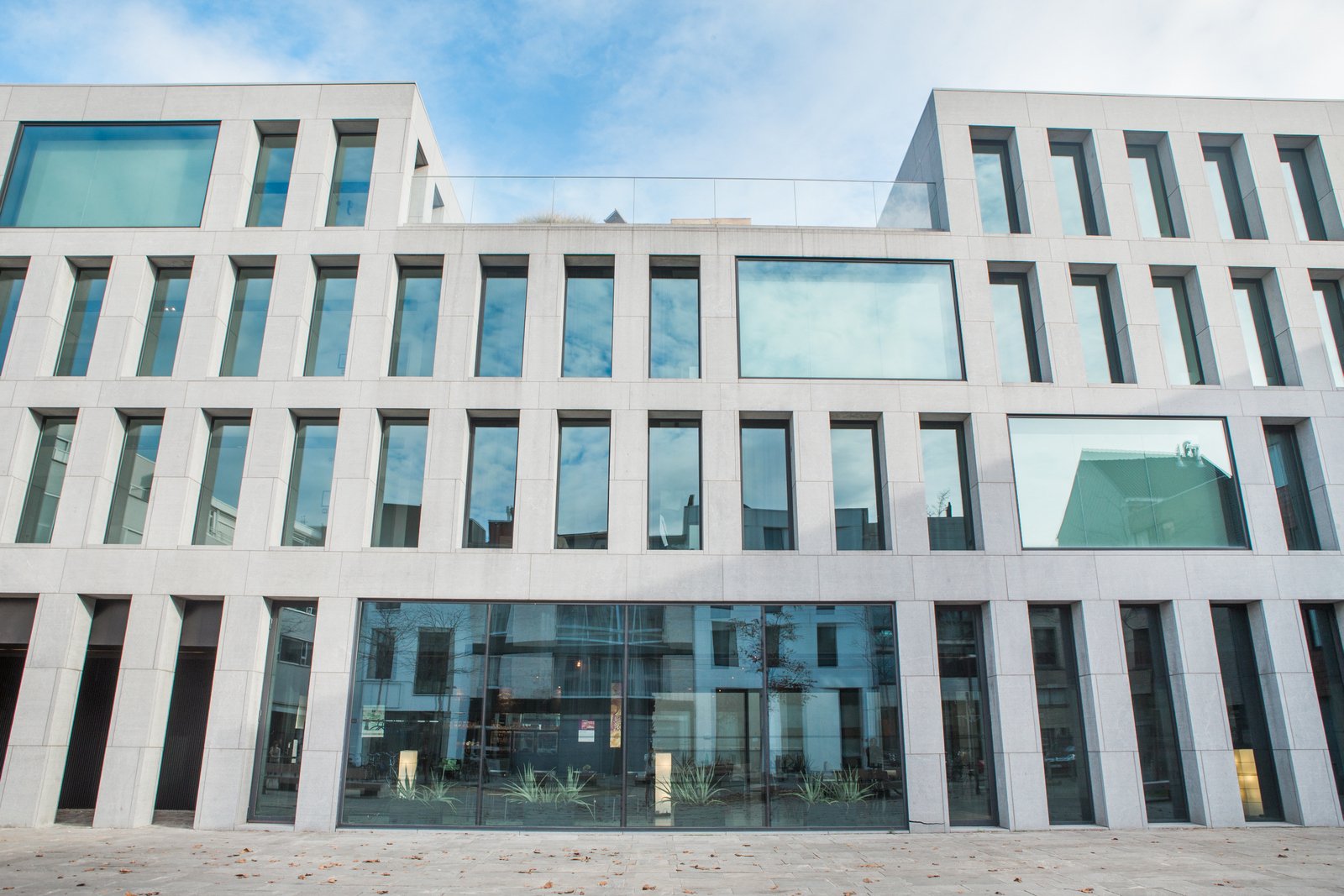
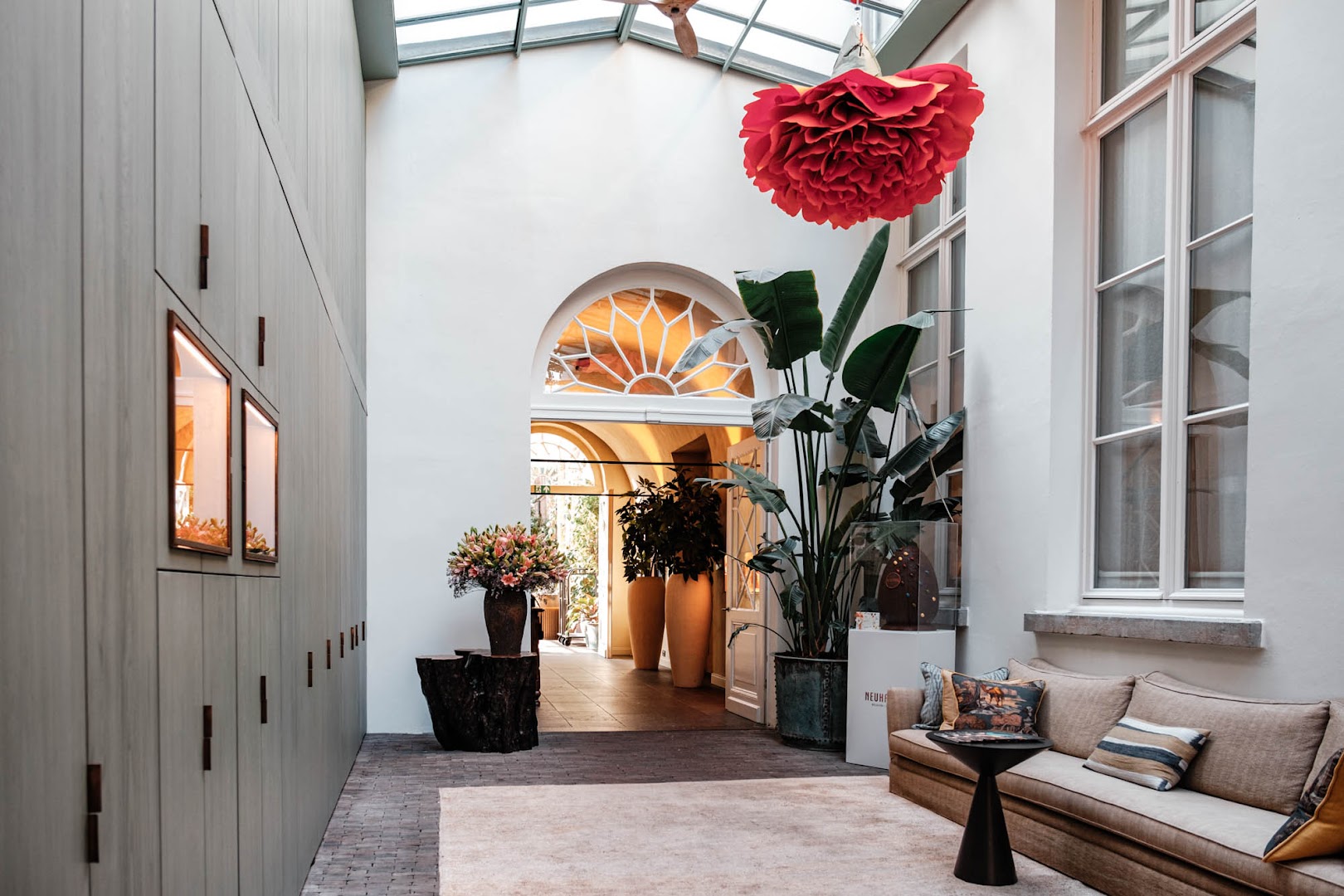
A walled complex of former convent and hospital buildings on Leopoldstraat, converted in 2022 into the city's only five-star hotel with its own herb garden and four restaurants. The botanical garden next door is public and free, and the cathedral is a twelve-minute walk north.

from ~320 EUR/night

Check prices
Hotel Julien, AntwerpCouples€€

Quiet townhouse boutique · Historic Centre

Hotel Julien

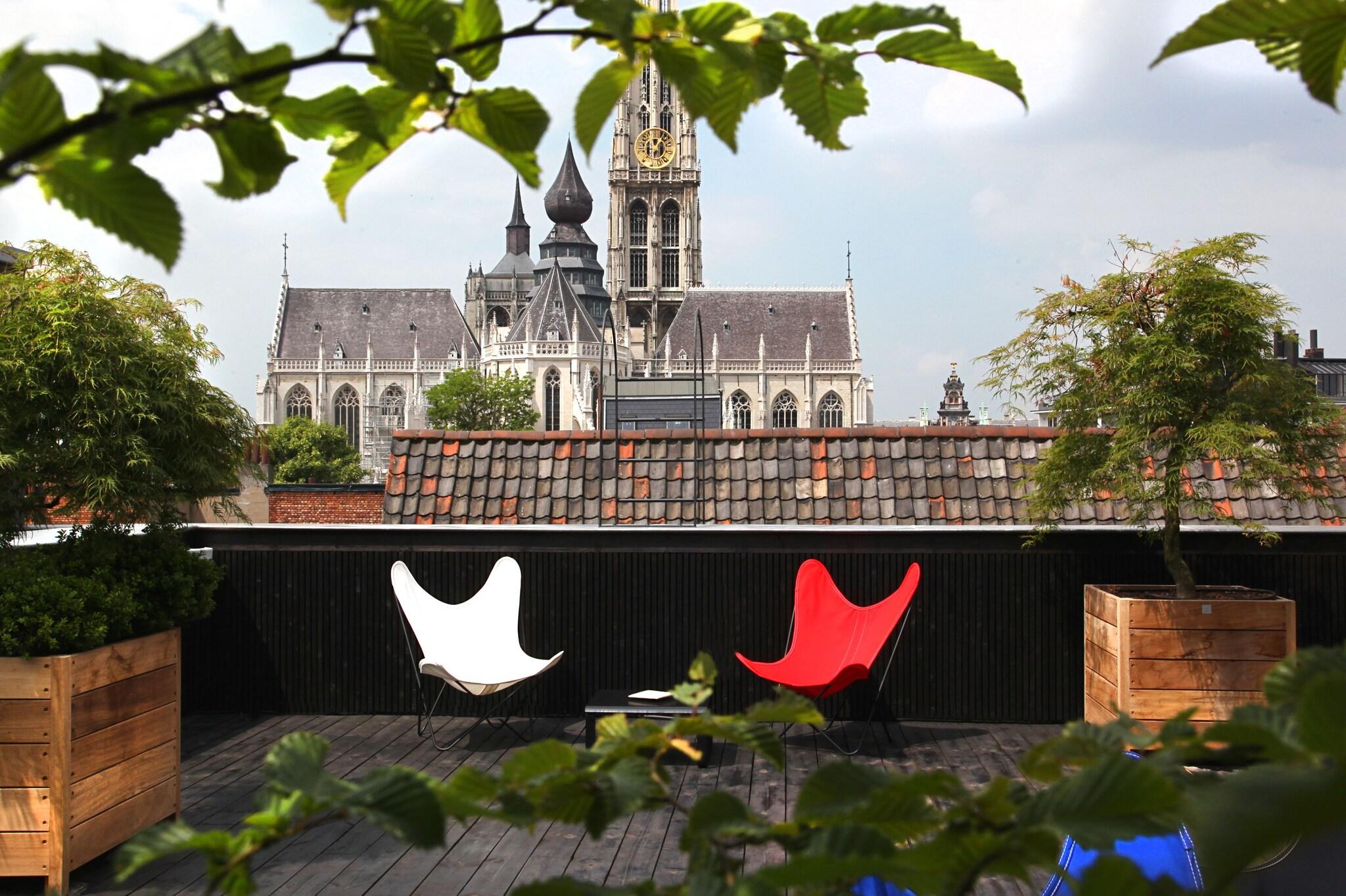
Two linked 16th-century houses on Korte Nieuwstraat with a courtyard, an honesty bar and a rooftop terrace that looks straight at the cathedral tower. There is no sign on the door beyond the house number, which tells you how much the owners care about keeping the place quiet.

from ~195 EUR/night

Check prices
Radisson Blu Hotel, Antwerp City Centre, AntwerpFirst visit€€

Big reliable station hotel · Diamond Quarter and Centraal

Radisson Blu Hotel, Antwerp City Centre

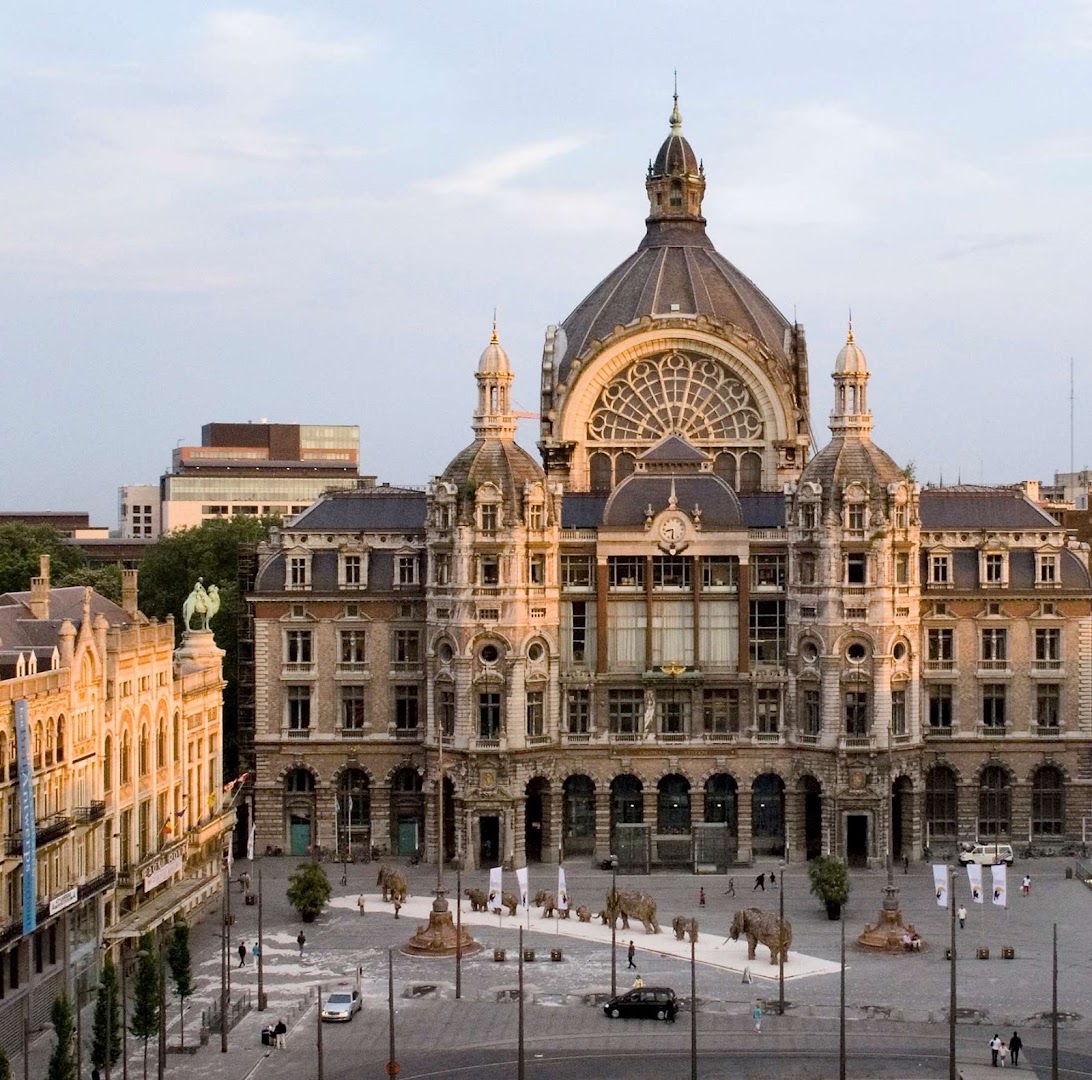
Long known as the Radisson Blu Astrid, it stands on Koningin Astridplein facing the domed front of Antwerpen-Centraal, so you can be off a Brussels or Amsterdam train and in your room in five minutes. The indoor pool, sauna and gym come with the room and look out over the station roof, with the pool open 7am to 10pm.

from ~130 EUR/night

Check prices
Youth Hostel Pulcinella, AntwerpBudget

Official Flemish youth hostel · Historic Centre

Youth Hostel Pulcinella

A purpose-built hostel on Bogaardeplein in the Sint-Andries quarter, two streets from the Plantin-Moretus printing museum and the fashion shops of Nationalestraat. Breakfast is included in the dorm rate, which is rare at this price in Belgium, and there is a bike shed for arrivals on two wheels.

from ~32 EUR/night

Check prices

Real hotel photos · prices are indicative from-rates, not live quotes · booking links support the site at no extra cost

D1

Day 1

Guild houses, Rubens and the river

Morning

  • Grote Markt and the Brabo Fountain1h

    Tram up from Het Zuid and start on the Grote Markt while it is still quiet, under the guild-house gables and the 1565 city hall, with the 1887 Brabo fountain throwing the giant's hand toward the Scheldt in the middle. It is free at any hour, and the unmarked gate at Oude Koornmarkt 16 leads into the sixteenth-century Vlaeykensgang alley nearby.

    TipJef Lambeaux sculpted the fountain in the middle of the square in 1887, showing the Roman soldier Silvius Brabo hurling the severed hand of the giant Antigoon into the Scheldt, the legend behind the popular reading of the city name as hand werpen, to throw a hand. The square and the fountain are free at any hour, the Renaissance city hall behind them was finished in 1565 and reopened in 2021 after a full restoration with guided visits bookable through the tourist office, and the terraces facing the square charge for the view, so eat one street back. Two minutes away, an unmarked gate at Oude Koornmarkt 16 opens into the Vlaeykensgang, a sixteenth-century alley that is free to walk.

  • Cathedral of Our Lady1h15

    Step into the Cathedral of Our Lady on your booked ticket for the four Rubens altarpieces under the 123-metre tower, the tallest church spire in the Low Countries. Hours are restricted on Saturdays and Sundays because services take priority, so confirm the day before.

    TipThe single finished tower reaches 123 metres, the tallest church spire in the Low Countries, and the nave holds four Rubens altarpieces, among them The Descent from the Cross, painted between 1612 and 1614 for the arquebusiers' guild altar, and The Raising of the Cross, made for another Antwerp church and moved here later. Entry runs around 12 EUR and the visiting hours are shorter than most people expect: weekday mornings from 10am, Saturdays only until mid-afternoon and Sundays from the early afternoon, because services come first. Buy online to walk straight past the ticket desk on Handschoenmarkt.

Afternoon

  • Museum Plantin-Moretus2h

    After lunch, spend two hours at the Plantin-Moretus house on Vrijdagmarkt, UNESCO listed in 2005 and holding the two oldest surviving printing presses in the world. The library and the courtyard garden are the quietest rooms, and the museum closes on Mondays.

    TipThe Plantin-Moretus house, printing works and bookshop went onto the UNESCO World Heritage list in 2005, the first museum inscribed as a site in its own right, and the press room holds the two oldest surviving printing presses in the world. It closes on Mondays, entry is around 12 EUR, and the Antwerp City Card pays for itself if you plan three museums or more. Allow two hours and do not walk past the library and the courtyard garden on your way to the presses, because they are the quietest rooms in the building.

  • Diamond Quarter and DIVA1h30

    Walk five minutes to DIVA on Suikerrui, the city museum of diamonds, jewellery and silver, where the audio-guided route takes about 90 minutes. Its weekly closing day is not the usual Monday, so check it before you set out.

    TipThe trade sits in a handful of bourses on Hoveniersstraat, Schupstraat and Rijfstraat right beside Centraal station, behind bollards and cameras: you can walk the streets, but the trading floors are closed and photographing people there is not welcome. To actually see stones, go to DIVA on Suikerrui near the Grote Markt, the city museum of diamonds, jewellery and silver, where the route with its included audio guide takes about 90 minutes. Check its opening days before you set out, because its weekly closing day is not the usual Monday.

Evening

  • Het Steen45 min

    Reach Het Steen on the quay in the last hour of light for the free rooftop deck over the Scheldt. The stone gate dates from around 1200 and is the oldest building in Antwerp, with the carved Semini figure above the entrance and the free city visitor centre inside.

    TipThe stone gate on the quay dates from around 1200 and is the oldest surviving building in Antwerp, with the carved figure of Semini above the entrance. Since 2021 it has housed the city visitor centre, which is free to walk into and useful for maps and tickets, while the storytelling experience inside is ticketed and the rooftop deck over the Scheldt is free in daylight hours. Come in the last hour of light, when the river and the left-bank skyline face you at their best.

  • Sint-Annatunnel1h

    Walk down the quay to Sint-Jansvliet and drop into the Sint-Annatunnel on the original 1933 wooden escalators, then cross the 572 metres under the river. Come up on the left bank for the skyline view back at the city, then walk the tunnel again rather than waiting for transport.

    TipThe pedestrian tunnel under the Scheldt opened in 1933, runs 572 metres at about 31 metres below the river and is free and open around the clock, with the original wooden-step escalators still carrying people down at each end. Enter at Sint-Jansvliet, walk across in roughly ten minutes and come up on the left bank for the classic view back at the Antwerp skyline, the one postcard shot you cannot take from the city side. Lifts run alongside the escalators when those are out of service.

  • 2h

    Head back to Het Zuid for dinner, where the kitchens around Marnixplaats and the Kaaien are better value than anything facing the Grote Markt. Order a bolleke, the round-glassed De Koninck amber ale, to see what you will be drinking at the brewery on day three.

D2

Day 2

The Eilandje docks and the great museums

Morning

  • MAS Museum aan de Stroom1h45

    Go north to the MAS in Het Eilandje and ride the free escalator boulevard up the outside of the red sandstone tower to the panorama terrace, which costs nothing and gives the widest view of the port and the old town. Pause on every landing, because each one faces a different way.

    TipThe escalator boulevard that spirals up the outside of the red sandstone tower is free, and so is the panorama terrace at the top, which gives the best view of the port, the Scheldt and the old town without paying for a single gallery. The roof stays open into the evening, later in summer than in winter, so it doubles as a sunset stop, while the ticketed museum floors close on Mondays. Each landing on the way up faces a different direction, so ride it slowly rather than looking only from the top.

  • 1h30

    Stay on the quays around Bonapartedok and Willemdok, the nineteenth-century docks rebuilt from the 2000s into flats, marinas and restaurants. The Red Star Line Museum in the old shipping sheds is the local story worth an hour: two million emigrants left from these quays for North America.

Afternoon

  • KMSKA Royal Museum of Fine Arts3h

    Return to your own quarter for the KMSKA on Leopold de Waelplaats, reopened in September 2022 after eleven years of works, with the largest James Ensor collection anywhere plus Rubens, Van Dyck, Memling and Fouquet. Book a timed slot, allow three hours and remember it closes Mondays.

    TipThe KMSKA reopened in September 2022 after eleven years closed, with a bright white new museum built inside the old shell, and it holds the largest James Ensor collection anywhere alongside Rubens, Van Dyck, Memling and Jean Fouquet. Book a timed slot online, budget around 20 EUR and allow three hours, because the modern wing is easy to underestimate. It closes on Mondays and stands on Leopold de Waelplaats in Het Zuid, about 10 minutes by tram from the centre.

  • Museum Mayer van den Bergh1h

    Cross to the Museum Mayer van den Bergh on Lange Gasthuisstraat for Bruegel's Dulle Griet, bought for almost nothing in 1894 and restored in 2018. The house is small and rarely busy, so an hour does it.

    TipThe reason to come is one painting: Pieter Bruegel the Elder's Dulle Griet, bought by Fritz Mayer van den Bergh in 1894 for almost nothing when nobody knew what it was, and restored in 2018, when cleaning brought back its colour and confirmed the date 1563. The house museum is small and rarely busy, an hour covers it, and it closes on Mondays like most collections here. It stands on Lange Gasthuisstraat, five minutes off the Meir, so it slots in without a detour.

Evening

  • Rubenshuis20 min

    Detour off the Meir to the Wapper to see where Rubens lived and worked from 1610 until 1640, but check the status first: the house has been closed for renovation since early 2024 and the reopening has slipped repeatedly. His grave chapel in Sint-Jacobskerk on Lange Nieuwstraat is the other Rubens address in the city.

    TipRubens bought this house on the Wapper in 1610 and rebuilt it as an Italianate home and studio, working there until his death in 1640. It closed to visitors in early 2024 for a long renovation that includes a new entrance building on the Wapper, and the reopening date has moved more than once, so check the museum's own site for the current status instead of turning up and hoping. While it is shut, the Rubens you can reliably see in Antwerp are the four altarpieces in the cathedral, the Rubens rooms at the KMSKA and his burial chapel in Sint-Jacobskerk on Lange Nieuwstraat.

  • Antwerpen-Centraal Station45 min

    Walk the rest of the Meir to Antwerpen-Centraal, Louis Delacenserie's 1895 to 1905 terminus, rebuilt in 2007 with four levels of platforms under the 75-metre dome. It is free and open late, and the top level looking down through the openings is the view to take away.

    TipLouis Delacenserie's terminus was built between 1895 and 1905, and the stone hall under its 75-metre dome is why the building is nicknamed the railway cathedral. A rebuild finished in 2007 threaded through tracks underneath, so four levels of platforms are now stacked inside; go to the top level and look down through the openings for the shot that actually works. It is free, open whenever trains run, and a flat 15-minute walk down the Meir from the cathedral.

  • 2h

    Dinner back in Het Zuid, then a drink on Vlaamse Kaai or Waalse Kaai, the dockside strip that stays busy long after the old town has locked up. A small glass of Elixir d'Anvers, distilled in the city since 1863, is the local way to close the night.

D3

Day 3

Sculpture park, brewery and art nouveau streets

Morning

  • Middelheim Open-Air Sculpture Museum3h

    Take bus 21 about 25 minutes south to the Middelheim Museum, 30 hectares of parkland holding more than 200 open-air sculptures from Rodin and Henry Moore to Panamarenko, free to enter and closed only on Mondays. Its closing time changes with the season, from roughly 5pm midwinter to 9pm in June and July, and the neighbouring Nachtegalenpark extends the walk.

    TipAround 30 hectares of parkland south of the centre hold more than 200 sculptures in the open air, from Rodin and Henry Moore to Panamarenko, and entry has always been free. It closes on Mondays and its closing time shifts with the season, roughly 5pm in midwinter and as late as 9pm in June and July, so check before planning a late visit; bus 21 from the centre takes about 25 minutes. Rain is no reason to skip it, and the neighbouring Nachtegalenpark turns it into a half day.

Afternoon

  • De Koninck Brewery and the Bolleke1h45

    Head back toward the city as far as Mechelsesteenweg for the De Koninck brewery, where the self-guided audio route through the brewhouse ends with a bolleke included in the ticket. The artisan hall on the same site holds a cheese cellar, a chocolatier and a butcher, so plan lunch here and book ahead at weekends.

    TipA bolleke is a De Koninck amber ale served in the round-bellied glass it is named after, and the brewery that makes it still stands on Mechelsesteenweg, about 25 minutes on foot from the cathedral or a short tram ride. The visit is a self-guided audio route through the brewhouse ending with a beer included in the ticket, and the same site holds an artisan hall with a cheese cellar, a chocolatier and a butcher, so arrive hungry. Book online for weekend slots, and on the way back into town eat your frites from a walk-up frituur rather than a Grote Markt terrace.

  • Zurenborg and Cogels-Osylei1h30

    Cross east to Zurenborg and walk Cogels-Osylei, Waterloostraat and Transvaalstraat, built between about 1894 and 1906 in a mix of art nouveau, neo-Gothic and neoclassical styles and saved from demolition by residents in the 1960s. Everything is private housing, so it is a free 45-minute walk with no interiors to queue for.

    TipCogels-Osylei and the streets around it went up between roughly 1894 and 1906 in a deliberate mix of art nouveau, neo-Gothic, neoclassical and Egyptian revival, and the quarter came close to demolition in the 1960s before residents fought the plans off. Everything here is private housing, so there are no interiors to visit: treat it as a free 45-minute walk along Cogels-Osylei, Waterloostraat and Transvaalstraat. Finish on Dageraadplaats two minutes away, where the cafe terraces and the cheaper dinners are.

Evening

  • 2h

    Eat on Dageraadplaats, the leafy square two minutes from the Cogels-Osylei mansions where the neighbourhood actually goes out, at prices well under the centre. Terraces here run late in summer and the tram back into town takes about 15 minutes.

  • 30 min

    If tomorrow is a travel day, plan it tonight: trains to Brussels-Midi leave Antwerpen-Centraal several times an hour and take about 45 minutes for around 9 EUR, and the direct service to Brussels Airport runs roughly 35 to 45 minutes for 16 to 18 EUR including the fixed airport supplement. Bruges is about an hour and a half away with one change.

Where to sleep for this itinerary

For 3 days, base yourself in Het Zuid. Het Zuid was laid out in the 1880s on the site of a demolished citadel, which is why it has wide boulevards and open squares where the rest of Antwerp has lanes. It is the museum and restaurant quarter, with the KMSKA, the photography museum and M HKA within a few blocks of Marnixplaats and most of the city's better bars along the old dockside streets of Vlaamse Kaai and Waalse Kaai. Base here for a longer stay that wants good food and room to breathe over postcard cobbles. Compare all neighborhoods in the full where-to-stay guide.

Hotels in Het Zuid
Loading hotel map…
Map shows live hotel prices. Open the full hotel search. Booking through it supports the site at no extra cost.

Short on time?

Antwerp in 2 days

Quick questions, straight answers

QIs 3 days enough for Antwerp?

Three days is the comfortable version of Antwerp, and the third day is what separates it from a Bruges trip: a green half day at the Middelheim open-air sculpture museum, free and closed only on Mondays, then the art nouveau streets of Zurenborg around Cogels-Osylei. Day one covers the medieval core, the Grote Markt and Brabo fountain, the cathedral's four Rubens altarpieces, the Plantin-Moretus printing house, the DIVA diamond museum, Het Steen and the 1933 wooden escalators of the Sint-Annatunnel. Day two goes north to the MAS for its free rooftop panorama, then south to Het Zuid for the KMSKA and Bruegel's Dulle Griet at the Mayer van den Bergh, finishing at Antwerpen-Centraal.

QWhere should I stay for 3 days in Antwerp?

Base yourself in Het Zuid for this itinerary. Het Zuid was laid out in the 1880s on the site of a demolished citadel, which is why it has wide boulevards and open squares where the rest of Antwerp has lanes. It is the museum and restaurant quarter, with the KMSKA, the photography museum and M HKA within a few blocks of Marnixplaats and most of the city's better bars along the old dockside streets of Vlaamse Kaai and Waalse Kaai. Base here for a longer stay that wants good food and room to breathe over postcard cobbles.

QWhen is the best time for this Antwerp itinerary?

The plan works year round, but April, May, June give you the best weather-to-crowds ratio.